




Introduction to Sustainable Materials in Real Estate
Sustainable materials come from renewable resources or recycled content.
They reduce environmental impact throughout their entire lifecycle.
Moreover, these materials often require less energy during production.
Builders and developers increasingly select them for greener construction projects.
Therefore, sustainable materials support more environmentally responsible real estate development.
Growing Importance in the Housing Market
Buyers now prioritize energy efficiency and environmental responsibility.
Consequently, properties using sustainable materials gain competitive advantages.
Real estate firms like GreenBuild Homes support eco-conscious construction practices.
As a result, sustainable homes attract environmentally aware buyers.
Furthermore, regulations encourage builders to use sustainable materials.
Benefits Beyond Environmental Impact
Sustainable materials can improve home durability and resilience.
They often resist wear, moisture, and pests more effectively.
Consequently, these properties can reduce maintenance costs over time.
Additionally, sustainable construction can enhance indoor air quality.
This improvement supports healthier living environments for residents.
Common Types of Sustainable Materials
Builders frequently use bamboo, reclaimed wood, and recycled metal.
Other popular choices include low-VOC paints and sustainable insulation.
Meanwhile, innovations such as hempcrete and cork continue gaining traction.
These materials combine practical function with significant environmental benefits.
Homeowners appreciate their aesthetic appeal and practical value.
The Role of Sustainable Materials in Enhancing Home Durability
Sustainable materials strengthen homes and support long-lasting construction.
They can extend service life while reducing repair needs over time.
Furthermore, these materials help homeowners maintain durable residential spaces.
Long-Lasting Performance of Sustainable Materials
Sustainable materials provide exceptional strength and longevity for home construction.
For example, reclaimed wood from Evergreen Timberworks offers robust structural support.
Moreover, bamboo flooring from GreenEarth Supplies resists wear and tear effectively.
These materials withstand harsh weather conditions better than conventional options.
Consequently, homeowners like Sarah Mitchell experience fewer repairs over time.
Resistance to Environmental Damage
Sustainable materials often resist moisture, pests, and decay more effectively.
Thermally modified wood from Woodland Innovations reduces susceptibility to mold.
Additionally, recycled metal roofing from SilverLine Metals prevents rust and corrosion.
This resistance minimizes costly maintenance and deterioration throughout the year.
Thus, builders such as Kelvin Foster prefer these materials for longevity benefits.
Benefits of Energy Efficiency on Durability
Many sustainable materials improve home insulation and energy efficiency.
For instance, cellulose insulation by EcoTherm Solutions enhances thermal regulation.
As a result, homes maintain stable indoor temperatures and reduce system strain.
This stability significantly prolongs the lifespan of heating and cooling equipment.
Therefore, homeowners like Natalie Briggs enjoy lower energy costs and fewer repairs.
Environmental Advantages Supporting Residential Durability
Sourcing sustainable materials reduces environmental impacts and preserves natural resources.
Companies such as TerraBuild harvest materials responsibly to support renewability.
Furthermore, eco-friendly practices promote healthier ecosystems that support housing longevity.
Integrating these materials aligns with green building standards and enhances market appeal.
Consequently, developers like Mason Clark commit to durable, sustainable homes.
Durability and Longevity
Traditional materials like concrete and brick remain popular choices for home construction.
They generally resist weather-related wear and tear effectively.
However, sustainable materials such as bamboo and recycled steel also deliver excellent durability.
For instance, bamboo naturally resists moisture and pests.
Meanwhile, recycled steel provides high tensile strength and long-term performance.
Moreover, technology continues improving the performance of many sustainable materials.
Consequently, these materials often match or exceed traditional materials’ lifespans.
Environmental Impact
Traditional building materials often consume substantial natural resources during production.
For example, cement manufacturing generates considerable carbon emissions worldwide.
Conversely, sustainable materials aim to minimize environmental harm.
Certified wood supports responsible forest management practices.
Additionally, recycled glass and reclaimed wood reduce landfill waste.
Therefore, sustainable choices can lower a home’s carbon footprint.
These environmental benefits increasingly influence homebuyers’ decisions.
Cost Considerations
Traditional materials sometimes cost less initially because established supply chains support them.
However, their maintenance expenses can accumulate over time.
By contrast, sustainable materials may require greater initial investment.
Yet, these materials often reduce long-term expenses through energy efficiency.
For example, insulated hempcrete homes require less heating and cooling.
Likewise, recycled steel structures can reduce repair frequency.
Thus, buyers may save more throughout the home’s lifecycle.
Impact on Resale Value
Traditional materials generally support stable property values.
Nevertheless, buyers increasingly seek environmentally friendly home features.
Market data indicates that sustainable materials can improve resale prices.
For instance, energy-efficient windows and solar tiles can attract higher offers.
In addition, sustainable homes often qualify for green certifications.
These certifications can strengthen buyer confidence and market appeal.
Therefore, sustainable materials may increase a home’s resale potential.
Health and Indoor Air Quality
Some traditional materials release volatile organic compounds into indoor air.
These emissions can affect residents’ health and comfort over time.
Sustainable materials typically use natural or low-toxicity components.
For example, natural clay plasters regulate humidity and reduce allergens.
Similarly, cork flooring offers antimicrobial properties without harsh chemicals.
Consequently, sustainable homes often support better indoor air quality.
This benefit strongly appeals to families who prioritize health.
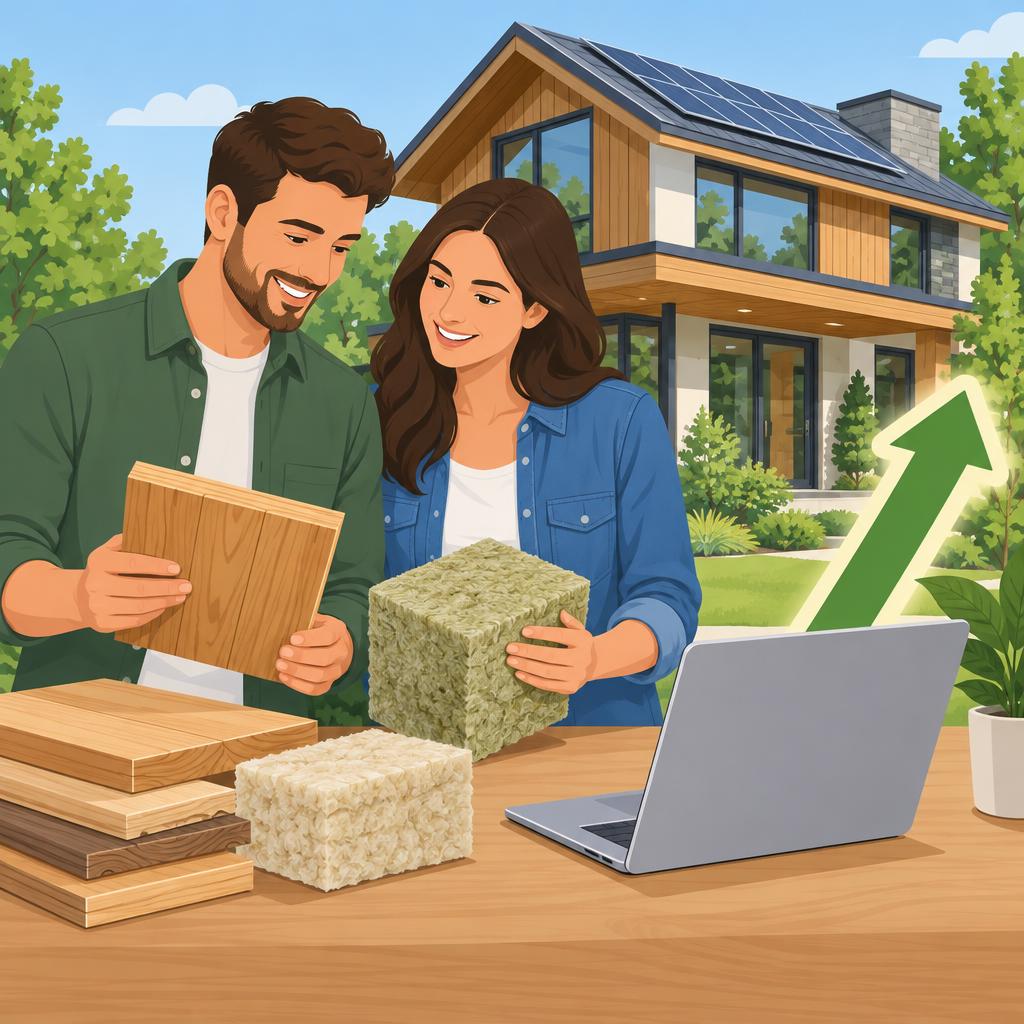
Key Material Characteristics
Traditional materials offer proven durability and broad availability.
However, they may create greater environmental challenges.
Sustainable materials provide comparable durability and a smaller environmental footprint.
They may also reduce costs over a home’s lifetime.
Additionally, sustainable materials can increase buyer interest and property value.
Finally, they can improve indoor air quality and occupant well-being.
- Traditional Materials: Proven durability, broad availability, and potential environmental drawbacks.
- Sustainable Materials: Comparable durability, reduced environmental impact, and possible long-term savings.
- Resale Value: Sustainable materials increasingly strengthen property value and buyer interest.
- Health Benefits: Sustainable materials support cleaner indoor air and occupant well-being.
You Might Also Like: Why Real Estate Investors Should Choose Sustainable Building Materials
The Importance of Longevity in Building Materials
Longevity guides material choices for residential construction.
Durable products can reduce repairs, replacement costs, and construction waste over time.
They can also support home value, buyer confidence, and environmental responsibility.
Durability as a Key Factor
Durability plays a crucial role when homeowners select building materials.
Long-lasting materials reduce the need for frequent repairs.
As a result, homeowners save money on maintenance and replacements.
For example, cedar wood resists decay better than many alternative materials.
Similarly, recycled steel provides strength while minimizing environmental impact.
Therefore, high-quality materials strengthen a home’s structural integrity.
Impact on Home Value
Longevity can increase resale value and attract discerning buyers.
Buyers appreciate homes built with reliable, sustainable materials.
Moreover, durable materials often include extended warranties that provide additional confidence.
Consequently, durable homes can sell faster in competitive markets.
Real estate expert Amelia Grant says durable materials improve market appeal.
Thus, longevity strengthens both asset value and buyer trust.
Environmental and Financial Benefits
Long-lasting materials significantly reduce waste sent to landfills.
In addition, they lower emissions associated with frequent renovations.
Eco-friendly producers, such as Evergreen Building Supplies, prioritize durability in their products.
Financially, this approach can create long-term savings for homeowners.
Homeowner Marcus Reynolds confirms savings from durable, sustainable choices.
Durable choices support both environmental goals and household budgets.
Gain More Insights: Innovative Sustainable Building Materials for Modern Home Construction
Environmental Impact of Sustainable Materials on Home Construction
Sustainable materials affect emissions, resources, waste, and indoor air quality.
Homes can use these materials to support environmental protection.
Additionally, their benefits extend to residents’ health and comfort.
Reduction of Carbon Footprint
Sustainable materials significantly lower carbon emissions during construction.
Moreover, manufacturers require less energy to produce them than traditional materials.
For instance, bamboo flooring from Evergreen Timbercuts reduces carbon output.
Additionally, GreenBuild Homes uses recycled steel to reduce greenhouse gases.
This shift helps mitigate climate change effects in the building sector.
Conservation of Natural Resources
Sustainable materials promote responsible use of natural resources.
They often come from renewable or rapidly replenished sources.
For example, ArborCraft Builders salvages reclaimed wood to preserve forests.
Similarly, EcoDwelling Solutions harvests cork that grows back quickly after cutting.
Thus, these practices protect ecosystems while supporting construction needs.
Waste Reduction and Recycling
Sustainable building materials help reduce construction waste significantly.
Companies like TerraBuild Inc. reuse industrial byproducts in their products.
Furthermore, ClearView Construction uses modular homes to minimize site waste.
This approach lowers landfill use and promotes circular economy principles.
As a result, building projects generate less environmental pollution overall.
Improved Indoor Air Quality
Many sustainable materials enhance indoor air quality for homeowners.
PureLiving Co. produces natural paints containing fewer volatile organic compounds.
Likewise, GreenHaven Materials provides insulation made from sheep’s wool.
This insulation reduces harmful emissions inside homes.
Consequently, these materials improve health and comfort within homes.
Find Out More: Decoding Latest Trends In Home Renovations For Optimal Real Estate Investment
How Home Durability Affects Resale Value
Home durability influences buyer confidence, maintenance needs, and the property’s perceived market value.
Buyers often assess construction quality before comparing offers and long-term ownership expenses.
Consequently, durable homes can attract stronger demand and support higher resale value.
Importance of Structural Integrity
Durable homes withstand harsh weather and daily wear better than less resilient properties.
Therefore, they require less maintenance and fewer repairs over time.
Buyers often prioritize solid structures that support long-term household safety.
Consequently, durable construction increases buyer confidence and market demand.
Longevity Reduces Future Expenses
Homes built to last reduce the risk of costly replacements and repairs.
As a result, buyers recognize properties with lower future financial burdens.
In addition, durable homes can reduce utility bills through better materials.
Thus, longevity directly supports stronger resale value.
Enhanced Aesthetic Appeal
Durable materials retain their appearance and resist damage for longer periods.
Consequently, well-preserved homes attract more potential buyers.
Moreover, curb appeal strongly influences a property’s perceived value.
This visual appeal can encourage quicker sales and higher offers.
Market Perception and Trust
Real estate experts like Lauren Mitchell emphasize durability during appraisals.
Experts recognize sustainable and durable features as important selling points.
Therefore, resilient materials can give homes a competitive market advantage.
Ultimately, confidence in construction quality strengthens overall property value.
Key Durable Features That Influence Resale
Buyers seek features that promise long-term reliability and efficiency.
These features can improve durability while strengthening resale appeal.
- High-quality roofing materials that last decades
- Energy-efficient windows and insulation
- Weather-resistant exterior cladding
- Strong foundational systems resistant to shifting or erosion
Gain More Insights: Navigating Energy Efficient Home Renovation Trends For Increased Property Value
Case Studies of Homes Built with Sustainable Materials and Their Market Performance
These homes combine sustainable materials with practical design and measurable market appeal.
Each property demonstrates how material choices can influence maintenance, comfort, and buyer interest.
Furthermore, the reported sales results connect sustainable construction with stronger residential investment performance.
Greenfield Residence: Bamboo and Recycled Steel Integration
The Greenfield Residence combines bamboo flooring with recycled steel framing.
Homeowners selected these materials for their strength and environmental benefits.
Consequently, the house withstood extreme weather while requiring minimal maintenance.
Real estate agent Emily Watkins observed increased buyer interest in the property.
Moreover, the home sold within weeks for 15% above the neighborhood average price.
These materials supported durability and strengthened the property’s resale appeal.
Pineview Eco Home: Rammed Earth Walls and Solar Panels
Pineview Eco Home features rammed earth walls and embedded solar technology.
This combination significantly reduces energy costs over time.
Energy consultant Marcus Lee confirmed that the home outperforms conventional builds in efficiency.
As a result, Pineview quickly attracted environmentally conscious buyers.
Additionally, the property’s market value increased steadily over five years.
Investors recognize the connection between sustainable construction and stronger resale value.
Maplewood Cottage: Reclaimed Wood and Low-VOC Paint
Maplewood Cottage uses reclaimed wood for framing and low-VOC paint indoors.
These choices support healthy indoor air quality and resource conservation.
The family reported fewer repairs than similar traditional homes in the same climate.
Local realtor Sandra Kim said the property’s charm improves its marketability.
Furthermore, buyers pay premiums for well-maintained, eco-friendly features.
This cottage demonstrates how sustainability can improve comfort and asset value.
Benefits Observed Across Sustainable Home Case Studies
Each home demonstrated strong performance through its use of sustainable materials.
Furthermore, maintenance costs remained lower than those of conventional homes.
The market rewarded these properties with faster sales and better prices.
Experts connect sustainable materials with improved home performance and buyer demand.
These cases show how green building methods can support financial returns.
Factors Driving Market Performance of Sustainable Homes
Buyer preferences increasingly favor energy efficiency and environmental responsibility.
Meanwhile, material technologies continue improving structural life and property performance.
Lower utility expenses can also improve a home’s overall affordability.
- Evolving buyer preferences favor energy efficiency and environmental responsibility.
- Improved material technologies support longer structural life.
- Lower utility expenses increase overall home affordability.
- Government incentives provide additional financial advantages to owners.
- Positive community perceptions can raise neighborhood desirability.
Future Trends in Sustainable Building Practices and Their Economic Implications
Sustainable building practices continue to influence residential construction and property markets.
Builders combine renewable materials, smart systems, and energy efficient designs to support more sustainable homes.
These changes also create economic opportunities for homeowners, developers, investors, and real estate professionals.
Innovations in Sustainable Materials
Manufacturers increasingly develop eco-friendly materials with improved durability.
Meanwhile, builders show growing interest in biodegradable composites and recycled metals.
Moreover, companies like GreenBuild Solutions lead advancements in renewable materials.
These innovations reduce environmental impact and support longer-lasting homes.
Additionally, sustainable insulation products improve energy efficiency significantly.
Integration of Smart Technologies
Smart home systems optimize energy consumption through automated controls.
For instance, SolarLink Innovations offers solar panels with integrated real-time monitoring.
Similarly, energy-efficient thermostats adjust settings according to occupancy patterns.
As a result, homeowners reduce utility costs while maintaining comfort.
Therefore, smart technologies increase sustainability and strengthen market appeal.
Economic Benefits for Homeowners
Homes built with sustainable materials typically appreciate faster in value.
Real estate firms like Evergreen Properties report higher demand for green-certified homes.
Furthermore, durable materials reduce maintenance expenses over time.
Consequently, homeowners experience lower repair costs and stronger resale pricing.
Finally, sustainability certifications can qualify sellers for tax incentives and grants.
Shifts in Market Dynamics
Buyers increasingly prioritize energy efficiency and environmental responsibility during home searches.
Developers respond by promoting green building credentials more prominently.
Realtors such as Mason & Steele highlight sustainable features during property tours.
Thus, sustainable homes gain a competitive advantage in crowded markets.
In effect, market dynamics increasingly reward sustainability-oriented construction.
Government Policies Supporting Green Construction
Regulations promote renewable resources and encourage builders to reduce carbon footprints.
Agencies like the Green Building Council establish robust sustainability standards.
Moreover, new zoning laws encourage eco-friendly residential development.
These policies stimulate innovation and lower entry barriers for sustainable building.
Hence, builders and buyers benefit from stronger regulatory support.
Sustainability as a Long-Term Investment Strategy
Informed investors view green homes as sound financial commitments.
They consider future energy savings and resale premiums during cost analyses.
Additionally, sustainable properties attract environmentally conscious tenants and buyers.
Therefore, sustainable practices align economic objectives with ecological goals.
Forward-thinking strategies support resilience in evolving housing markets.


