




Overview of Sustainable Building Materials
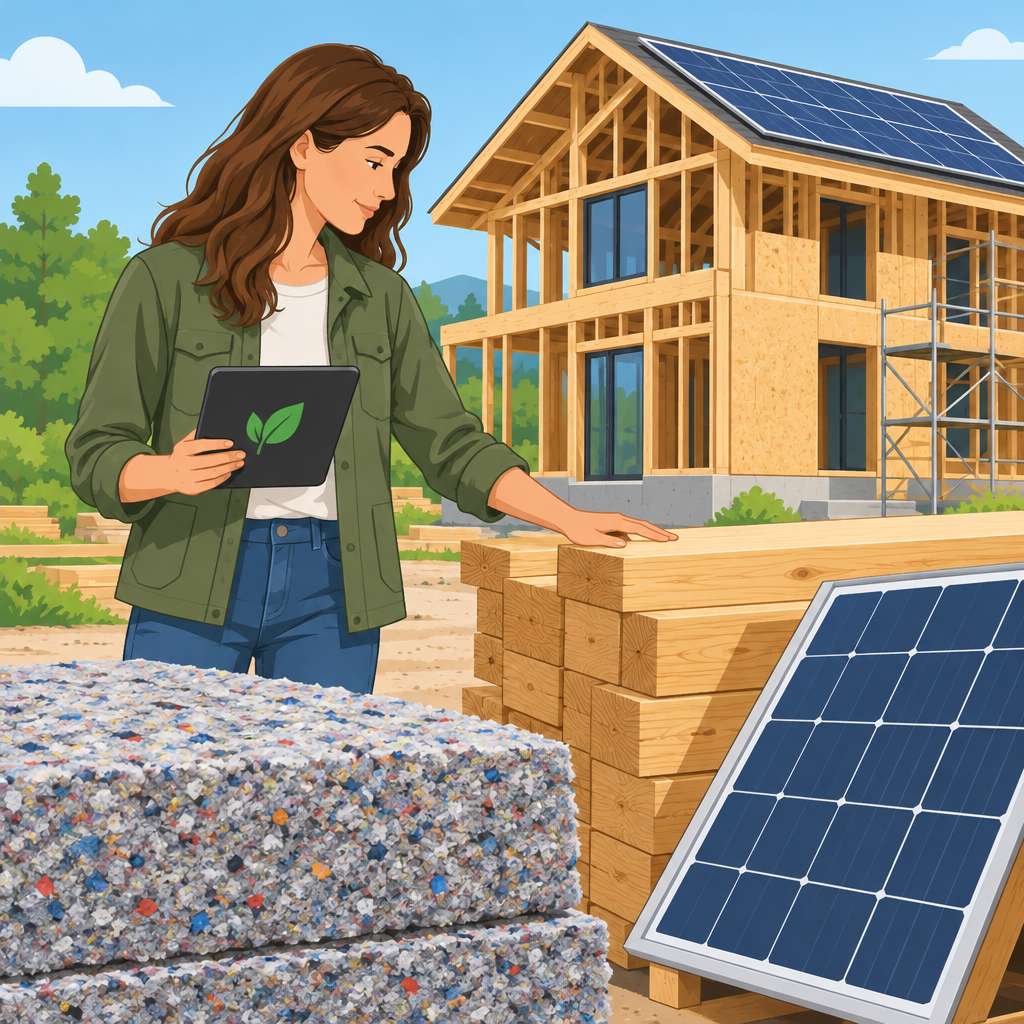
Sustainable building materials use renewable or recycled resources.
They reduce environmental impacts during construction and occupancy.
These choices support efficient, durable, and responsible buildings.
Definition of Sustainable Building Materials
Sustainable building materials come from renewable or recycled resources.
They aim to reduce negative environmental impacts during production and use.
These materials support energy efficiency, waste reduction, and resource conservation.
In addition, sustainable materials often enhance indoor air quality and durability.
They promote healthier living spaces and responsible construction practices.
Importance of Sustainable Building Materials
The construction industry significantly affects natural resource consumption.
Therefore, choosing sustainable materials helps lower carbon footprints effectively.
Moreover, these materials contribute to reducing greenhouse gas emissions.
They also minimize landfill waste by encouraging recycling and reuse.
Adopting sustainable materials supports long-term environmental and economic benefits.
Additionally, these materials can improve building performance and reduce maintenance costs.
Benefits to Modern Home Construction
Modern homes built with sustainable materials achieve higher energy efficiency.
This results in lower utility bills and increased comfort for occupants.
Furthermore, these materials often resist pests and moisture more effectively.
For example, hempcrete and recycled steel improve structural integrity and sustainability.
Designers and builders can create eco-friendly, innovative homes using these resources.
Consequently, sustainable materials help meet consumer demand for greener homes.
Key Characteristics of Sustainable Materials
Sustainable materials combine responsible sourcing with practical performance.
They conserve resources while supporting healthier and more durable buildings.
Their key characteristics include renewability, recyclability, safety, and durability.
- Renewability: Materials come from rapidly replenished resources.
- Recyclability: Materials can be reused or recycled after initial use.
- Low Embodied Energy: Production requires minimal energy.
- Non-toxicity: Materials remain safe for people and the environment.
- Durability: Long-lasting performance reduces replacement frequency.
The Role of Recycled Materials in Modern Construction
Recycled materials help modern builders reduce resource demand while supporting more responsible construction practices.
They also offer practical options for homes, infrastructure, and other construction projects.
Furthermore, recycled products can support durable designs without relying entirely on virgin materials.
Environmental Benefits of Using Recycled Materials
Recycled materials reduce the demand for virgin resources in construction projects.
They also decrease waste sent to landfills and support environmental conservation.
Moreover, their production can lower greenhouse gas emissions.
Consequently, builders can reduce the carbon footprint of construction projects.
For example, recycled steel and concrete reduce the need for energy-intensive mining.
Common Types of Recycled Materials in Construction
Builders use recycled steel, glass, concrete, and reclaimed wood in modern homes.
Recycled steel provides strength and durability comparable to new steel.
Meanwhile, crushed recycled concrete serves as aggregate for new concrete mixes.
Reclaimed wood adds distinctive character while reducing pressure on forests.
In addition, recycled glass supports tiles, countertops, and insulation products.
Innovative Applications and Techniques
Advanced methods integrate recycled plastics into durable building components.
These plastics can improve insulation while reducing reliance on non-renewable resources.
Companies like GreenBuild Solutions have developed composite materials containing recycled content.
Furthermore, modular construction often incorporates recycled elements for faster assembly.
This approach minimizes construction waste and promotes sustainable building practices.
Challenges and Industry Responses
Some builders hesitate because they question the quality of recycled materials.
However, rigorous testing and certification support product reliability and safety.
Additionally, suppliers such as TerraForm Materials work to provide consistent recycled products.
Industry standards increasingly recognize recycled materials as viable construction options.
Education and innovation can therefore encourage broader acceptance in home construction.
Supporting Sustainable Building Practices
Recycled materials align with green building certifications such as LEED and WELL.
Builders using these materials may qualify for tax incentives and grants.
Moreover, many homeowners prioritize eco-friendly designs when selecting builders.
Companies like Evergreen Homes promote recycled materials to attract environmentally conscious clients.
Thus, recycled materials support more sustainable and modern construction practices.
Unique Structural Properties of Bamboo
Bamboo offers exceptional strength that compares with steel in certain applications.
Its lightweight structure reduces transportation costs and simplifies construction processes.
Moreover, natural flexibility helps bamboo withstand earthquake movement.
Because bamboo grows rapidly, it provides a quickly renewable building resource.
Engineered bamboo products deliver greater uniformity and reliability for modern construction.
Environmental Benefits of Bamboo in Home Construction
Bamboo cultivation stabilizes soil and effectively reduces erosion.
Additionally, bamboo absorbs more carbon dioxide than many tree species.
Using bamboo decreases timber dependence and reduces pressure on forests.
Furthermore, bamboo farming generally requires fewer pesticides and fertilizers than conventional crops.
These practices support sustainable forestry and responsible land management.
Versatile Applications of Bamboo in Modern Homes
Builders use bamboo for flooring, walls, and roofing because it creates visual appeal.
Its natural texture adds warmth and distinctive character to interior spaces.
Architects also incorporate bamboo into furniture, cabinetry, and decorative elements.
Prefabricated bamboo panels accelerate construction and help lower labor costs.
Meanwhile, bamboo composites extend applications to structural beams and trusses.
Economic Advantages of Choosing Bamboo
Bamboo renews quickly, which can help reduce material costs over time.
Its production supports local economies by creating opportunities for farmers and artisans.
Moreover, lower processing energy consumption can translate into reduced expenses.
Many builders choose bamboo as an affordable alternative that maintains durability.
Finally, bamboo construction aligns with growing green building market trends.
Explore Further: Decoding Latest Trends In Home Renovations For Optimal Real Estate Investment
Exploring Hempcrete for Eco-Friendly Homes
Hempcrete offers an eco-friendly alternative to traditional building materials.
Its renewable ingredients can reduce construction’s environmental footprint.
Moreover, hempcrete can improve indoor air quality by regulating humidity naturally.
Introduction to Hempcrete
Hempcrete combines hemp hurds with a natural binder.
Sustainable architects, including Marcus Ellery, have helped increase interest in this material.
Builders increasingly consider hempcrete for environmentally responsible construction projects.
Additionally, its porous composition supports natural humidity regulation inside homes.
Composition and Properties of Hempcrete
Hempcrete mainly contains hemp fibers, lime binder, and water.
Hemp hurds provide insulation and contribute useful material properties.
The lime binder hardens gently while preserving hempcrete’s breathability.
As a result, hempcrete walls remain porous and help prevent moisture buildup.
This porosity also helps limit mold and fungal growth within homes.
Advantages of Using Hempcrete in Modern Homes
Hempcrete supports comfortable, energy-efficient, and environmentally responsible homes.
Its insulation, durability, and fire resistance offer several practical benefits.
Furthermore, carbon storage adds an environmental advantage during construction.
Thermal Insulation and Energy Efficiency
Hempcrete provides strong thermal insulation for residential walls.
This insulation can reduce heating and cooling costs for homeowners.
Consequently, homes may consume less energy and rely less on fossil fuels.
Durability and Fire Resistance
The lime binder strengthens hempcrete and supports long-term durability.
It also provides natural fire resistance without toxic chemical additives.
Therefore, hempcrete homes can offer important safety benefits.
Carbon Sequestration and Environmental Impact
Hemp plants absorb significant carbon dioxide as they grow.
Hempcrete can retain that carbon within walls for decades.
Thus, the material can help reduce greenhouse gas emissions.
Applications and Industry Adoption
Architectural firms such as GreenRoots Designs have used hempcrete extensively.
Willow Creek Builders use hempcrete in energy-efficient residential projects.
Besides insulation, builders can use hempcrete as plaster or wall panels.
It also functions as structural infill during construction and renovation projects.
Challenges and Considerations for Hempcrete Use
Hempcrete still faces regulatory hurdles in some regions.
Builders must mix and cure the material correctly for optimal performance.
Limited industrial hemp supplies can temporarily restrict large-scale applications.
Despite these challenges, technical innovations continue improving hempcrete’s viability.
Find Out More: Navigating Energy Efficient Home Renovation Trends For Increased Property Value
The Benefits of Using Rammed Earth for Structural Integrity and Aesthetics
Rammed earth combines structural strength, thermal performance, visual character, and environmental benefits.
Its compacted soil walls support durable construction while creating distinctive interior and exterior surfaces.
Additionally, this building method can reduce maintenance needs and support efficient, long-lasting home construction.
Enhancing Structural Strength
Rammed earth creates exceptionally strong walls that support durable construction.
Builders like Green Horizons Architecture use this method for resilient homes.
The compacted soil mixture offers impressive load-bearing capacity.
Consequently, rammed earth structures endure harsh weather and seismic activity.
Moreover, its natural composition reduces the risk of material failure.
Promoting Thermal Efficiency
Rammed earth walls maintain stable indoor temperatures throughout the year.
They absorb heat during the day and slowly release it at night.
As a result, homeowners enjoy reduced heating and cooling costs.
The design firm TerraNova Homes highlights these energy-saving benefits.
Additionally, this material minimizes reliance on artificial climate control systems.
Creating Unique and Attractive Finishes
The natural colors and textures of rammed earth add aesthetic appeal.
Architects like Miguel Vasquez emphasize its warm, earthy tones in modern designs.
This technique allows custom layering and patterning of soils.
Therefore, each wall becomes a one-of-a-kind visual feature in a home.
Furthermore, its blend with other sustainable materials enhances overall design harmony.
Providing Eco-Friendly Construction Solutions
Rammed earth uses locally sourced, natural materials with a low carbon footprint.
Construction firms such as EcoBuild Solutions promote its environmental advantages.
It eliminates the need for energy-intensive materials like concrete or steel.
Consequently, rammed earth contributes to reducing greenhouse gas emissions.
Additionally, it offers biodegradability at the end of a building’s lifecycle.
Offering Longevity and Low Maintenance
Structures built with rammed earth stand the test of time and weather.
They require minimal upkeep compared with traditional building materials.
Investors like Summit Sustainable Properties appreciate the long-term cost savings.
The dense walls resist pests, mold, and fire effectively.
Thus, rammed earth proves a practical choice for lasting home construction.
Discover More: Understanding Adaptive Home Renovation Trends For Modern Real Estate In The USA
Smart Glass Technology in Energy-Efficient Home Design
Smart glass supports energy-efficient home design by controlling sunlight and improving indoor comfort.
It helps homeowners manage heat, glare, privacy, and natural light through responsive window technology.
As a result, smart glass can complement other sustainable features in modern homes.
Enhancing Energy Efficiency with Smart Glass
Smart glass technology actively regulates the amount of light entering a home.
Consequently, it helps reduce cooling and heating costs significantly.
Furthermore, smart glass minimizes the need for artificial lighting during daylight hours.
Homeowners gain better temperature control without sacrificing natural sunlight.
Additionally, this technology contributes to lowering a home’s overall carbon footprint.
Types of Smart Glass and Their Applications
Several types of smart glass serve different residential design needs.
Electrochromic glass changes tint when homeowners apply a small electrical charge.
Meanwhile, photochromic glass adjusts its tint automatically according to sunlight intensity.
Thermochromic glass responds to temperature changes and controls solar heat gain.
Therefore, each type provides benefits suited to specific home design requirements.
Benefits Beyond Energy Savings
Smart glass enhances privacy without requiring curtains or blinds.
It also increases natural light, which can support occupant well-being and mood.
Moreover, smart glass reduces glare and improves indoor comfort.
Beyond function, this technology adds modern aesthetic appeal to residential designs.
These combined benefits make smart glass useful for comfort-focused home improvements.
Incorporating Smart Glass into Modern Homes
Architects like Elena Cortez integrate smart glass into sustainable home designs.
Similarly, builders such as GreenField Homes promote smart glass for eco-friendly projects.
Smart glass pairs well with solar panels and efficient HVAC systems.
Homeowners can select smart glass during construction or add it through retrofitting.
This flexibility allows property owners to match installation choices with project requirements.
Considerations for Choosing Smart Glass
Homeowners should evaluate climate, budget, and desired control features before selecting smart glass.
Experts like BrightView Technologies can provide tailored smart glass solutions.
Additionally, installation quality strongly affects the glass’s durability and performance.
Regular maintenance helps the glass operate efficiently over time.
Careful planning helps homeowners gain practical benefits from their smart glass investment.
Uncover the Details: Luxury Home Upgrades That Attract High-End Homebuyers Instantly
The Future of Insulation: Aerogel and Its Energy-Saving Properties
Aerogel offers advanced insulation for more energy-efficient buildings.
Its lightweight structure combines strong thermal performance with practical installation options.
As research progresses, aerogel could support more sustainable construction worldwide.
Introduction to Aerogel
Aerogel provides remarkable thermal insulation through a lightweight silica structure.
Air fills most of the material, which limits heat movement effectively.
Consequently, aerogel can outperform many traditional insulation materials.
Energy Efficiency Benefits
Aerogel reduces heat transfer through walls, roofs, and other building envelope components.
Therefore, homes can retain warmth during winter and remain cooler during summer.
Lower temperature fluctuations can reduce energy use for heating and cooling.
Moreover, reduced energy consumption can help homeowners lower their annual bills.
Durability and Practical Use
Aerogel resists moisture, fire, and chemical damage.
Its durable structure helps preserve insulation performance throughout a long service life.
Additionally, installers can use aerogel panels and blankets in walls and roofs.
GreenTech Innovations has helped advance practical applications for this material.
Environmental Impact and Sustainability
Aerogel manufacturing requires fewer raw materials than conventional insulation production.
As a result, construction projects can reduce their environmental footprint.
Improved building efficiency also reduces greenhouse gas emissions from household energy use.
Thus, aerogel supports sustainable building goals pursued by companies like TerraBuild Solutions.
Challenges and Industry Adoption
Currently, aerogel insulation costs more than many standard insulation materials.
However, EcoForm Creations continues developing methods that may reduce production expenses.
Lower prices could make aerogel more accessible to homeowners and builders.
Gradual adoption may expand energy-saving construction technology across the industry.
Future Directions for Aerogel Insulation
Researchers continue improving aerogel flexibility and fire resistance.
Furthermore, scientists are exploring hybrids that combine aerogel with recycled components.
These developments could support cleaner and more efficient homes.
Ultimately, aerogel may become an important material in sustainable architecture worldwide.
Impact of 3D Printing on Sustainable Home Construction Materials
3D printing significantly reduces construction material waste compared to traditional methods.
Moreover, precise layering ensures that builders use only the needed amount of material.
Consequently, builders minimize excess materials and lower project costs simultaneously.
This innovative approach preserves natural resources and reduces environmental impact.
Use of Eco-Friendly Materials in 3D Printing
Many companies develop biodegradable and recycled materials suitable for 3D printing.
For example, GreenBuild Technologies creates sustainable concrete alternatives for printers.
Additionally, these materials often provide enhanced insulation properties that improve energy efficiency.
Therefore, 3D-printed homes can achieve stronger sustainability standards than traditional homes.
Customization and Design Flexibility
3D printing allows architects to design complex shapes that optimize structural integrity.
As a result, homes can use less material without sacrificing durability or safety.
Furthermore, customization enables builders to integrate sustainable features during the design phase.
For instance, builders can embed channels for natural ventilation and passive cooling.
Accelerated Construction Timelines
3D printing accelerates building speeds compared to conventional construction techniques.
This efficiency reduces onsite labor requirements and lowers energy consumption during construction.
In turn, faster construction shortens disruptions to the environment and surrounding communities.
Moreover, EcoHabitat Solutions reports that 3D printing can halve project completion times.
Industry Adoption and Future Prospects
Construction firms, including TerraForm Builds, increasingly adopt 3D printing for sustainable homes.
Meanwhile, growing research investments boost material innovation and printing technology capabilities.
Consequently, 3D printing could support mass-produced, affordable green housing.
Ultimately, this technology is transforming sustainable building material practices worldwide.


