




Understanding the Importance of Sustainable Building Materials
Sustainable building materials support environmental, health, and economic goals.
They also help homeowners meet changing construction expectations.
Therefore, material choices can influence homes, communities, and future building practices.
Environmental Benefits of Sustainable Materials
Choosing sustainable building materials reduces the carbon footprint of your home.
Moreover, these materials often come from renewable resources.
They help minimize waste by promoting recycling and reuse.
Consequently, sustainable materials lessen the strain on natural ecosystems.
For instance, reclaimed wood preserves forests and reduces landfill use.
Health Advantages for Homeowners
Sustainable building materials typically contain fewer harmful chemicals.
Therefore, they improve indoor air quality significantly.
This results in a healthier living environment for families.
Additionally, natural materials like bamboo resist mold and pests naturally.
The absence of toxic substances also reduces allergy and asthma risks.
Economic and Community Impact
Using sustainable materials can lower energy and maintenance costs.
Furthermore, supporting eco-friendly suppliers boosts local green economies.
Builders like Greenfield Construction specialize in sustainable sourcing.
Choosing these resources encourages innovation within the building industry.
Ultimately, sustainable materials contribute to long-term economic resilience.
Meeting Regulatory and Market Demands
Many regions now require sustainable practices in construction permits.
Meeting these standards can streamline approval processes efficiently.
Homebuyers increasingly value eco-friendly design and materials.
Thus, sustainable homes often command higher resale values.
Builders who adopt sustainable materials position themselves ahead competitively.
Exploring Local Material Suppliers
Start by identifying building material suppliers in your region.
Local companies like GreenStone Timber and Evergreen Masonry offer competitive prices.
Furthermore, local suppliers often reduce shipping costs and environmental impact.
Check their websites or visit their stores to compare prices and product quality.
Moreover, many local suppliers provide sustainable or recycled materials.
Connecting with Community Builders and Networks
Join local building and renovation groups to exchange resource information.
Organizations such as the Riverside Home Builders Association connect buyers with trustworthy vendors.
Additionally, attending community workshops can reveal hidden affordable material sources.
Networking also allows you to hear firsthand reviews of suppliers and products.
Therefore, stay active in local forums and social media groups related to construction.
Utilizing Salvage Yards and Recycled Material Centers
Consider visiting salvage yards for reclaimed wood, bricks, and fixtures.
The Timber Revival Salvage Yard in Oakville offers quality reused materials at low prices.
Besides affordability, using recycled materials significantly lowers your home’s ecological footprint.
Before purchasing, inspect materials for durability and suitability in your project.
Consequently, integrating salvage materials can maintain aesthetic appeal and sustainability.
Researching Local Building Codes and Incentives
Investigate your area’s building regulations to ensure material compliance.
The Portland Construction Office provides detailed guidelines on approved sustainable materials.
In addition, some municipalities offer incentives or rebates for using eco-friendly products.
Check programs like the Green Building Incentive Program for potential financial support.
Hence, aligning your choices with local policies enhances sustainability and cost savings.
Benefits of Recycled and Salvaged Materials
Recycled and salvaged materials reduce demand for newly extracted resources.
They also help lower the environmental impact of construction projects.
Additionally, these materials often cost less than newly manufactured alternatives.
Unique textures and finishes can enhance custom home designs.
Sources for Recycled and Salvaged Building Materials
Start by contacting local architectural salvage yards, such as GreenWood Reclaimers.
These businesses may offer reclaimed wood, bricks, and steel from demolition sites.
Meanwhile, Habitat for Humanity’s ReStores provide discounted building items.
Specialized companies like Blue Ridge Salvage offer distinctive reclaimed materials.
Online marketplaces such as Tradewood connect buyers with reclaimed products.
Assessing Material Quality and Safety
Inspect every material for structural integrity, damage, and other defects.
Furthermore, consult trusted experts, including restoration contractor Miguel Salazar.
Before installation, confirm that salvaged wood contains no pests or rot.
Test bricks and stones to ensure they do not crumble under pressure.
Finally, verify that recycled metals meet applicable building codes and standards.
Legal and Environmental Considerations
Obtain all necessary permits before repurposing salvaged or recycled materials.
Also, confirm that salvaged items contain no hazardous substances, such as asbestos.
Follow local regulations governing material reuse and disposal.
Choosing reclaimed materials supports waste reduction and sustainability goals.
Tips for Successful Integration in Home Building
Plan the design around variations in salvaged materials.
Next, coordinate with builders experienced in using recycled products.
Combine new and reclaimed materials to support durability and style.
Maintain flexibility by considering alternative items when necessary.
Document each material’s provenance to strengthen your home’s story and value.
Uncover the Details: The Impact of Sustainable Materials on Home Durability and Resale Value
Exploring Online Marketplaces for Building Materials
Online marketplaces offer a wide range of affordable building materials.
Homeowners can compare prices and products with ease.
Furthermore, platforms like GreenBuild Supply and EcoMarket specialize in sustainable materials.
These websites provide detailed product information and customer reviews.
As a result, buyers make informed decisions while minimizing environmental impact.
Additionally, many sellers offer bulk discounts and shipping options to reduce costs.
Therefore, online shopping provides a convenient and cost-effective solution.
Identifying Reliable Eco-Friendly Suppliers
Dedicated eco-friendly suppliers help ensure sustainable materials meet quality expectations.
For example, Evergreen Timber and TerraStone source renewable and recycled resources.
These suppliers follow environmental standards and maintain relevant certifications.
Consequently, customers receive verified sustainable products for their projects.
Moreover, local eco-suppliers reduce transportation emissions and support community businesses.
Checking each supplier’s environmental policies strengthens trust and transparency.
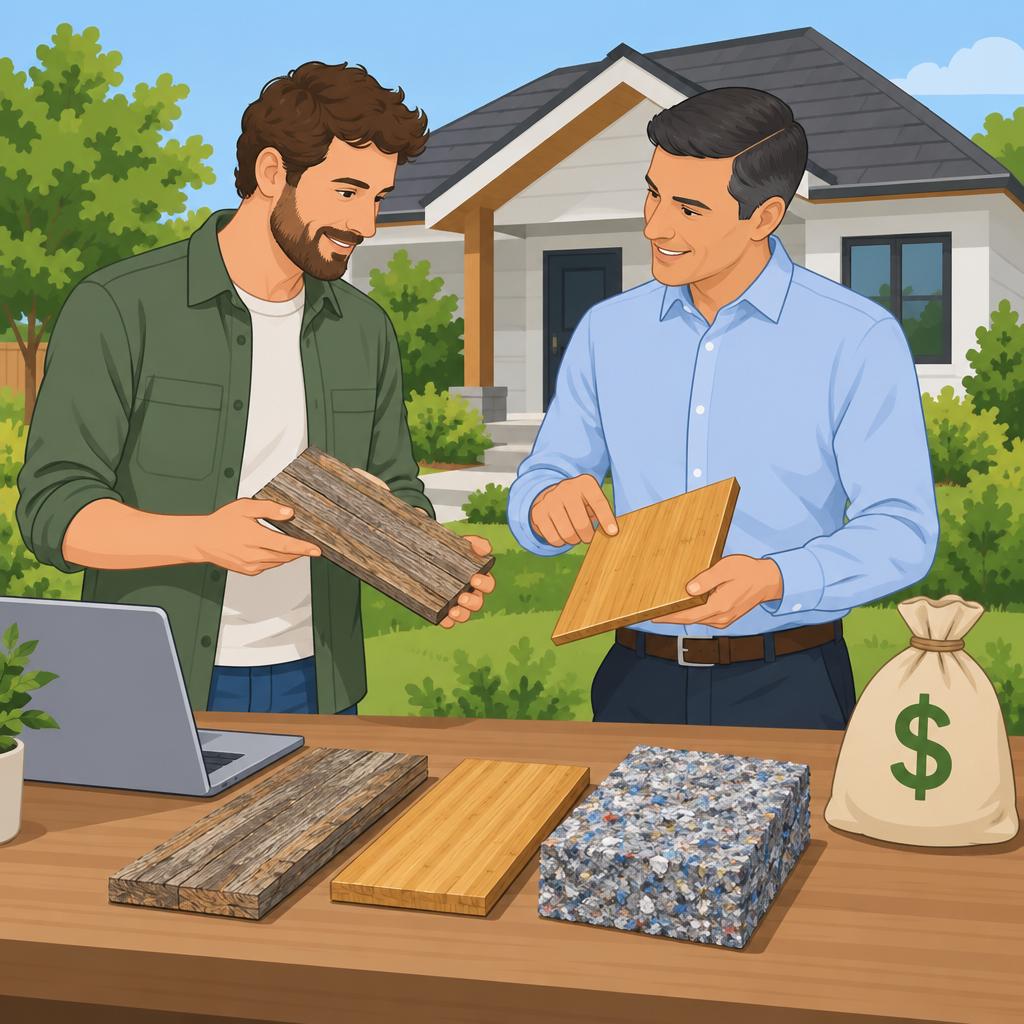
Tips for Choosing the Right Supplier and Marketplace
First, research supplier reputations through reviews and testimonials.
Next, verify the sustainability certifications for available products.
Then, assess pricing structures and delivery terms carefully.
Also, consider suppliers that provide customization or material consultations.
Finally, prioritize suppliers with strong customer support and return policies.
Benefits of Combining Online Tools and Eco-Conscious Sourcing
This approach streamlines sourcing while promoting sustainable construction practices.
Homeowners save time, control costs, and reduce their environmental footprint.
In addition, online tools provide access to innovative materials beyond traditional stores.
These resources help homeowners support greener construction practices more effectively.
See Related Content: Why Real Estate Investors Should Choose Sustainable Building Materials
Networking with Local Builders and Contractors for Recommendations
Local builders can help homeowners find affordable material sources.
Contractors often know suppliers with firsthand experience in sustainable construction.
Strong professional relationships can reveal trusted options within your area.
Building Trust through Local Connections
Local builders create valuable opportunities for sourcing construction materials.
Contractors can recommend affordable suppliers with reliable products and services.
For example, Michael Thompson and Grace Alvarez share trusted material sources.
They can also suggest eco-friendly products without sacrificing cost-effectiveness.
Effective Ways to Network with Industry Professionals
Attend local homebuilding and green construction events to meet experienced professionals.
Additionally, join community trade groups such as the Cedar Grove Builders Association.
These groups create informal settings for exchanging recommendations openly.
Social media groups can connect you with sustainable building professionals.
LinkedIn and local Facebook communities often include active builders and suppliers.
Brief meetings with Aaron Delgado or Hanna Li can clarify their preferred sources.
Questions to Ask for Beneficial Material Suggestions
Ask which suppliers offer eco-friendly materials at competitive prices.
Next, inquire about vendors that provide consistent quality and dependable service.
Request examples of sustainable projects that contractors completed recently.
Also, ask about special deals or bulk purchasing options.
These options may help reduce material costs.
Finally, ask whether contractors prefer companies like Evergreen Timberworks or Verde Stone Supply.
Leveraging Recommendations to Make Informed Decisions
Compare recommended sources by reviewing product availability and pricing.
Then, check certifications such as FSC, LEED, or Cradle to Cradle.
These certifications help verify sustainability claims.
Visit supplier showrooms or request samples to evaluate material quality firsthand.
Furthermore, review feedback from builders’ past projects.
This feedback can help you assess supplier reliability.
Use these insights to select materials that support budget and environmental goals.
Delve into the Subject: Innovative Sustainable Building Materials for Modern Home Construction
Long-Term Value of Sustainable Materials
Sustainable materials often require higher upfront costs than conventional options.
However, they can provide significant savings throughout a building’s service life.
For instance, durable insulation can reduce heating and cooling expenses effectively.
Additionally, eco-friendly roofing materials often last longer and require less maintenance.
Therefore, homeowners should compare immediate expenses with future financial benefits.
Samuel Thatcher from GreenBuild Consulting emphasizes long-term value instead of initial price.
Environmental Benefits and Economic Advantages
Sustainable building materials can reduce carbon footprints substantially.
Consequently, these materials can support healthier living environments.
Environmental improvements may also create savings through incentives and tax credits.
Many municipalities offer rebates for certified sustainable products used in residential construction.
For example, Evergreen Homes secured a 10% property tax reduction through eco-friendly wood.
Such incentives can improve the overall cost-effectiveness of sustainable materials.
Maintenance and Replacement Expenses
Sustainable materials often need less frequent maintenance than traditional alternatives.
For example, bamboo flooring can resist wear and damage better than some hardwoods.
Likewise, reclaimed brick can withstand weathering without extensive repairs.
Reduced maintenance can lower lifetime expenses for homeowners.
Martha Delgado, a project manager at EcoConstruct, notes that careful sourcing minimizes long-term costs.
Accordingly, buyers should include maintenance and replacement needs in cost-benefit evaluations.
Strategies for Affordable Sustainable Choices
Homeowners can source materials locally to reduce transportation expenses.
They can also combine affordable products with sustainable materials.
For instance, recycled steel framing can pair with reclaimed wood finishes.
Furthermore, bulk purchase negotiations may help buyers obtain better vendor pricing.
Professionals like James Whitaker from TerraBuild Materials can provide sourcing advice.
These strategies help balance budget efficiency with environmental responsibility.
Delve into the Subject: Decoding Latest Trends In Home Renovations For Optimal Real Estate Investment
Government Grants for Sustainable Building Materials
Many governments offer grants that encourage sustainable building materials.
These grants can considerably reduce the initial cost of eco-friendly materials.
Consequently, they make sustainable construction more accessible to homeowners.
Additionally, some programs provide rebates after project completion.
For example, Oregon’s Green Homes Initiative offers rebates for energy-efficient upgrades.
Moreover, local councils often provide incentives that reflect regional priorities.
Therefore, homeowners should contact city or county offices about unique opportunities.
Homeowners should apply early to improve their chances of receiving funding.
Types of Sustainable Building Incentives
Incentives include tax credits, subsidies, and low-interest loans.
Tax credits directly reduce the taxes owed after eligible project expenses.
Meanwhile, subsidies provide upfront assistance with material and labor costs.
Low-interest loans offer affordable financing for sustainable home improvements.
Some programs combine several incentives to increase their financial impact.
For instance, the California Energy Commission offers rebates and tax credits.
Furthermore, renewable energy incentives often complement sustainable building materials grants.
Finding Relevant Grants and Incentive Programs
Begin by visiting government websites focused on housing and energy.
These portals often list current programs and application requirements.
Additionally, nonprofit organizations can help identify suitable project grants.
Reputable firms like Evergreen Building Solutions often help clients secure incentives.
Consulting certified green builders can improve an application’s accuracy.
These professionals understand documentation and compliance requirements thoroughly.
Furthermore, local sustainability workshops can provide useful contacts and resources.
Maximizing Available Program Benefits
Carefully read each program’s guidelines before submitting an application.
Following instructions precisely helps prevent delays and rejections.
Document every purchase and completed task with receipts and certifications.
Keep records organized to simplify reporting and verification.
Combining multiple grants can significantly reduce overall building costs.
Finally, monitor new incentives because policies frequently change.
Implementing DIY Solutions for Cost Savings
DIY projects can reduce labor costs during sustainable home construction.
They also let homeowners customize materials and construction techniques.
Furthermore, hands-on work can reduce waste and strengthen connections with the home.
DIY Benefits for Sustainable Building
Taking on suitable tasks can significantly reduce labor expenses.
Moreover, homeowners can select materials and techniques that match their preferences.
Careful DIY work can also limit waste during construction.
Additionally, these projects encourage the reuse of reclaimed and natural materials.
Finally, hands-on involvement fosters a deeper connection with the home.
Planning Your DIY Building Projects
Begin by researching sustainable building methods that suit your project.
Next, identify tasks that match your skills and available time.
Also, consult experts or attend local workshops about eco-friendly construction.
Create a detailed plan covering materials, tools, and project timelines.
Meanwhile, set a realistic budget and reserve funds for unexpected needs.
Sourcing Affordable Sustainable Materials for DIY
Look for reclaimed wood from dismantled local buildings or older furniture.
Similarly, repurposed bricks, tiles, and metal can support affordable construction.
Visit regional salvage yards such as Evergreen Reclaimed Materials.
Online marketplaces like GreenBuild Traders also offer recycled supplies.
When practical, consider natural materials such as bamboo or straw bales.
Effective DIY Techniques to Maximize Savings
Learn basic carpentry and masonry skills through instructional video tutorials.
Then, use simple joinery methods that require fewer fasteners.
Natural insulation materials, including sheep wool or cellulose, can support the project.
With expert guidance, homeowners can install rainwater harvesting systems themselves.
Always wear protective gear and maintain safe working practices.
Working with Community and Local Experts
Join local sustainable building groups or permaculture clubs for practical support.
Furthermore, collaborate with experienced builders like the Mason Lumber & Supply team.
Attend community build days to develop hands-on experience.
Sharing tools and advice can reduce expenses for participating homeowners.
Finally, local partnerships support green economic activity and skills development.


