




Introduction to Virtual Reality in Real Estate
Transforming Property Viewing Experiences
Virtual reality has revolutionized how buyers explore real estate properties.
It allows remote buyers to tour homes without physical visits.
This technology enhances visualization beyond traditional photos.
Prospective buyers gain a realistic sense of space and layout through VR.
Consequently, it saves time and resources for both buyers and agents.
Key Advantages of Virtual Reality for Remote Buyers
Remote buyers enjoy convenience by accessing multiple listings from anywhere.
Moreover, VR provides immersive experiences that static images cannot match.
This innovation reduces the uncertainty often felt during distant property purchases.
Clients also can revisit virtual tours multiple times for better decision-making.
Real estate professionals like Olivia Martinez use VR to offer personalized virtual walkthroughs.
Technological Developments Enabling VR in Real Estate
Recent advancements in VR headsets from companies like Oculus have improved accessibility.
Interactive features let buyers navigate homes at their own pace confidently.
Additionally, 3D scanning technology captures accurate and detailed property images.
Leading real estate firms such as Landmark Realty Group integrate VR into their marketing strategies.
This investment highlights the growing importance of virtual reality in the industry.
Benefits of Virtual Reality for Remote Buyers
Enhanced Property Visualization
Virtual reality allows remote buyers to explore properties in an immersive way.
It creates a realistic experience that photos and videos cannot match.
As a result, buyers can better imagine living in the home.
This clarity helps them make more confident purchasing decisions.
Time and Cost Efficiency
Remote buyers save time by touring multiple homes without traveling.
This convenience reduces travel expenses and scheduling conflicts.
Moreover, buyers like Samantha Blake keep up with market options faster.
Therefore, virtual reality streamlines the entire home-buying process.
Improved Communication with Agents
Virtual tours enable real estate agents to guide buyers remotely.
For example, agent Marcus Nguyen can highlight key features during live walkthroughs.
Such interaction fosters better understanding and trust between parties.
Consequently, questions are addressed promptly, improving buyer satisfaction.
Access to a Wider Market
Virtual reality opens doors to properties across different cities and states.
Remote buyers can consider diverse options without geographical limits.
Sophia Ramirez, a client from Chicago, discovered ideal homes in San Diego virtually.
This expanded reach broadens their opportunities and investment potential.
Reduced Need for Physical Visits
Virtual reality limits unnecessary in-person visits, which saves effort.
It helps buyers prioritize homes they are genuinely interested in.
Consequently, this approach lowers stress and logistical challenges.
Thus, VR offers a convenient way to narrow down choices before visiting.
Customization and Interactive Features
Some virtual reality platforms allow buyers to customize spaces during tours.
They can change wall colors or furniture arrangements virtually.
This interactivity helps buyers visualize personalized possibilities for their home.
For instance, investor Daniel Lee used VR to plan renovations remotely.
Increased Confidence in Decision-Making
Seeing every detail up close reduces uncertainty for remote buyers.
It ensures they do not rely solely on secondhand information.
Ultimately, this leads to fewer surprises after purchase.
Buyers feel more assured when committing to a property they experienced firsthand.
Key Technologies Enabling Virtual Reality Experiences
High-Performance Hardware
Modern virtual reality relies on powerful hardware components.
Graphics processing units (GPUs) render immersive 3D environments smoothly.
Additionally, advanced central processing units (CPUs) handle complex VR computations.
Moreover, specialized VR headsets provide high-resolution displays with low latency.
Companies like Meta and Varjo lead in developing cutting-edge VR hardware.
Furthermore, wearable sensors enhance tracking accuracy for user movements.
Software Platforms and Development Tools
Robust software platforms build and manage VR content efficiently.
Unity and Unreal Engine offer flexible frameworks for creating virtual spaces.
These engines support realistic visual effects and physics simulations.
Additionally, custom software integrates real estate data with VR environments.
Real estate agencies often collaborate with developers to tailor VR applications.
Besides, cloud-based solutions facilitate remote data storage and streaming.
3D Scanning and Modeling Technologies
Accurate 3D scans create realistic digital representations of properties.
Lidar and photogrammetry capture detailed spatial information effectively.
Professional services like ScanPoint utilize these technologies for real estate.
Subsequently, models are optimized for real-time VR exploration.
Moreover, interior designers contribute by adding virtual furnishings and decor.
Networking and Streaming Infrastructure
Stable high-speed internet connections are essential for seamless VR experiences.
Edge computing reduces latency by processing data closer to users.
Providers such as VeloNet specialize in delivering VR-optimized network services.
These networks enable live streaming of virtual property tours worldwide.
Consequently, remote buyers can interact with real estate agents in real time.
Motion Tracking and Input Devices
Motion sensors capture head and hand movements to enhance immersion.
Controllers and haptic gloves allow intuitive interaction within virtual spaces.
Companies like NeuroSense innovate in gesture recognition and tactile feedback.
Such devices improve navigation through virtual property walkthroughs.
Thus, users experience a more natural and engaging buying process.
Learn More: Real Estate Market Analytics Tools for Predicting Market Demand
How Virtual Tours Enhance Property Viewing
Immersive Experience from Any Location
Virtual tours provide an immersive experience that replicates an in-person property visit.
Buyers can explore homes thoroughly without the need to be physically present.
Remote buyers save time and avoid travel costs as a result.
Advanced 3D modeling and high-resolution images create realistic property walkthroughs.
This technology allows users to navigate at their own pace.
They can focus on details they find important during their tours.
Improved Visualization of Space and Layout
Virtual tours help buyers understand the spatial flow of a property better than photos alone.
Viewers can gauge room sizes and layout connections clearly.
Consequently, they make more informed decisions about a property’s suitability.
Interactive features like zoom and 360-degree views enhance the visualization process.
Agents can highlight key property features within the virtual tour environment.
Convenience and Accessibility for Diverse Buyers
Virtual tours increase accessibility for buyers with busy schedules or mobility challenges.
International buyers benefit particularly from the ability to view homes remotely.
These tours are available anytime, facilitating flexible viewing schedules.
Buyers can revisit and compare multiple properties effortlessly as a result.
The convenience often speeds up the decision-making process for buyers.
Insights from Data and Analytics
Real estate companies use virtual tour analytics to track buyer engagement effectively.
Data shows that homes with virtual tours receive more inquiries and sell faster.
Virtual tours also reduce unnecessary physical visits by filtering genuinely interested buyers.
This advantage helps agents like Amanda Reynolds from Crestview Properties optimize their workload.
Ultimately, this technology improves efficiency for both buyers and sellers.
Gain More Insights: Real Estate Market Analytics Tools for Commercial Leasing Trends
Comparing Virtual Reality with Traditional Property Viewing Methods
Accessibility and Convenience
Virtual reality allows buyers to explore properties without traveling.
This technology removes geographical barriers effectively.
Traditional methods often require physical visits causing time constraints.
Moreover, virtual tours enable viewing multiple properties quickly.
In contrast, scheduling and commuting take significant effort for in-person visits.
Therefore, VR improves accessibility and convenience for remote buyers.
Level of Detail and Immersion
Virtual reality offers immersive 3D environments of properties.
Users can navigate rooms and interact with features realistically.
Traditional viewings provide tangible experiences but can be limited by lighting and staging.
However, VR can simulate various settings and furnishing options dynamically.
This flexibility aids buyers in envisioning their future home better.
Consequently, VR often delivers a richer sense of space and design.
Time and Cost Efficiency
Virtual reality reduces the need for costly travel expenses.
Agents and buyers save time by eliminating multiple physical visits.
Traditional methods involve transportation and coordination costs.
Additionally, VR tours can be accessed anytime speeding up decision-making.
This improved efficiency benefits both buyers like Elena Navarro and agents from Skyline Realty.
Hence, VR proves to be a cost-effective solution for property viewing.
Interactivity and Customization
VR platforms allow users to customize finishes and layouts virtually.
This interactivity enhances engagement and personalizes the experience.
Traditional viewings rarely offer such customization on the spot.
Buyers can test different design choices instantly with VR technology.
Such features assist clients like Marcus Chen in making informed decisions.
Thus, virtual reality fosters a more interactive and tailored property search.
Challenges and Complementary Uses of VR
Despite its advantages, VR may lack tactile feedback and real-world ambiance.
Traditional visits provide senses like smell and ambient sounds firsthand.
Moreover, some buyers prefer in-person emotional connections to a space.
Technical issues or VR headset accessibility can also pose challenges.
Real estate firms like Meridian Estates balance both methods for optimal results.
Ultimately, integrating VR with traditional approaches serves diverse buyer needs best.
Delve into the Subject: The Impact of Blockchain on Real Estate Appraisals
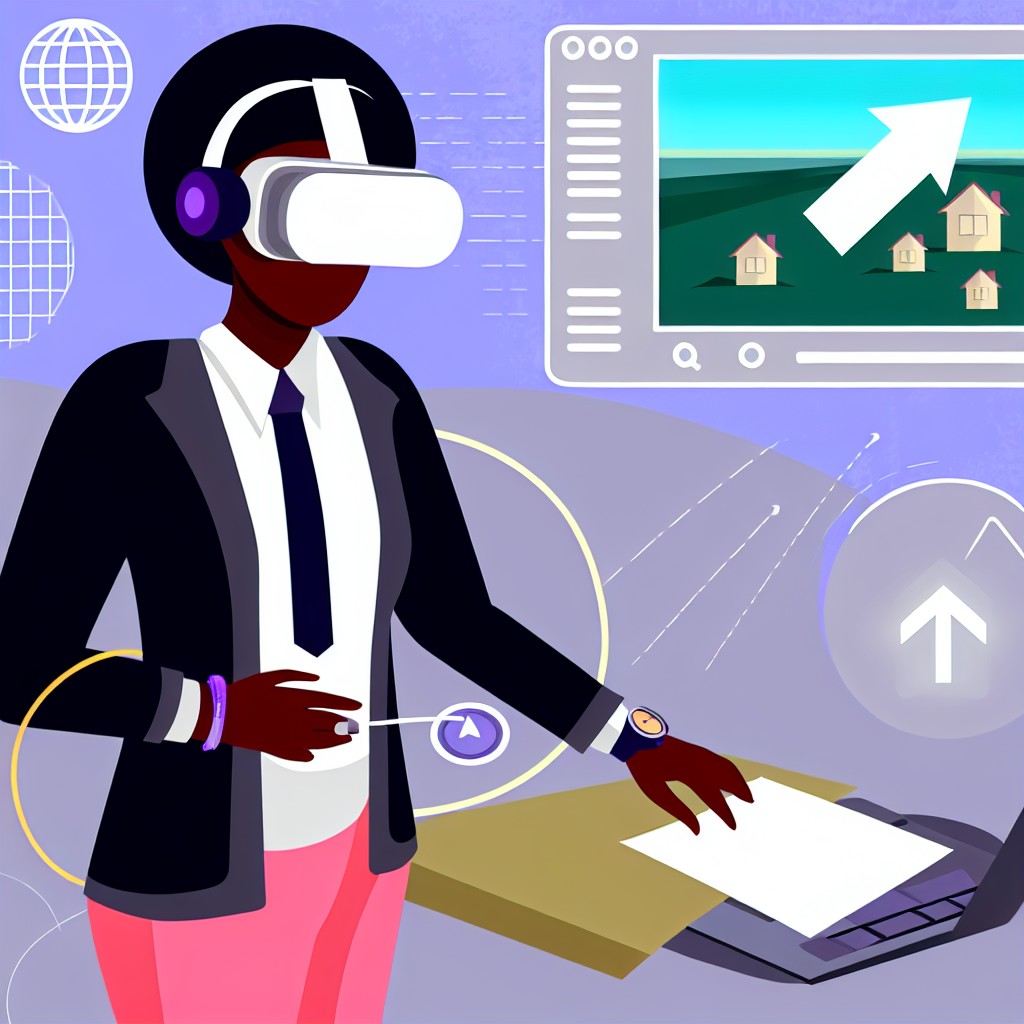
Challenges Faced by Remote Buyers in Real Estate Transactions
Difficulty in Physical Property Inspection
Remote buyers cannot visit properties in person before purchase.
This limitation makes it hard to assess the true condition of a home.
They often rely on photos and videos, which may not capture all details.
Consequently, buyers risk missing defects or issues that impact value.
Limited Local Market Knowledge
Remote buyers usually lack insight into neighborhood dynamics and trends.
They may find it challenging to understand school quality, safety, and amenities.
This lack of firsthand knowledge can affect decision-making significantly.
Therefore, buyers must depend heavily on agents or local contacts for information.
Communication Barriers with Agents and Sellers
Time zone differences often complicate scheduling calls and property viewings.
Cultural and language differences may also create misunderstandings.
These factors can delay responses and reduce transaction efficiency.
Ultimately, buyers may feel disconnected from the process.
Complexities with Legal and Financial Processes
Remote buyers face difficulty managing contracts and paperwork from afar.
Understanding local laws and regulations can be overwhelming without expert help.
Securing financing remotely often requires additional documentation and verification.
Thus, navigating legal and financial matters can extend transaction timelines.
Challenges in Building Trust and Confidence
Without physical presence, remote buyers may struggle to trust sellers and agents.
They often worry about transparency and potential fraud in the deal.
This concern can lead to hesitation or withdrawal from promising transactions.
Therefore, remote buyers need reliable technologies to build trust remotely.
Summary of Key Obstacles
- Inability to perform thorough in-person property inspections
- Scarcity of in-depth local area knowledge
- Communication hurdles caused by time zones and cultural gaps
- Complex legal and financial procedures handled at a distance
- Lack of direct trust-building opportunities with stakeholders
Explore Further: How AI Is Transforming Real Estate Property Management
Future Trends of Virtual Reality in the Real Estate Market
Advancements in Immersive Technology
Virtual reality technology continues to evolve at a rapid pace.
New VR headsets by companies like HorizonTech offer higher resolution and comfort.
Consequently, users experience more lifelike virtual tours with realistic details.
Moreover, haptic feedback devices create tactile sensations during property walkthroughs.
This combination increases buyer confidence and engagement remotely.
Integration with Artificial Intelligence
Artificial intelligence enhances VR experiences by personalizing property recommendations.
RealtyVision, a startup in Boston, designs AI-driven VR platforms for client preferences.
Therefore, buyers save time by viewing homes suited exactly to their needs.
Additionally, AI chatbots assist during virtual tours, answering questions instantly.
This innovative support improves the overall remote buying experience significantly.
Expansion of Virtual Real Estate Marketplaces
Leading real estate firms are launching dedicated VR marketplaces online.
For instance, Miami-based Luxe Estates recently introduced a fully immersive property platform.
Consequently, buyers browse multiple listings through interactive 3D models in one place.
This accessibility breaks geographical barriers and appeals to international investors.
Furthermore, marketplaces often provide virtual staging to showcase potential home designs.
Use of Augmented Reality for Hybrid Experiences
Augmented reality complements virtual reality by blending digital elements with physical spaces.
For example, UrbanNest Realty in Seattle uses AR apps to overlay furniture in vacant homes.
Thus, remote buyers visualize renovations or interior layouts before purchase.
In turn, AR helps bridge gaps between virtual and onsite property visits effectively.
This hybrid approach caters to various buyer preferences and technological comfort levels.
Increased Adoption by Real Estate Professionals
More agents and brokers integrate VR tools into their sales strategies daily.
Alexa Martinez, a New York agent, credits VR tours with doubling her client engagement rate.
Additionally, remote closings become smoother as both parties visualize properties clearly.
Training programs now teach realtors how to leverage VR for marketing and negotiations.
Thus, the industry adapts quickly to meet the demands of digitally savvy buyers.
Focus on Sustainable and Smart Housing
Virtual reality helps showcase sustainable building features in interactive ways.
GreenLeaf Properties highlights eco-friendly designs by simulating solar use and energy savings.
Potential buyers explore smart home systems and environmentally conscious layouts virtually.
As a result, VR fosters awareness and demand for greener real estate options.
This trend aligns with increased global emphasis on sustainability and technology integration.
Case Studies of Successful Implementation of VR in Property Sales
Enhancing Buyer Experience with Skyline Realty
Skyline Realty integrated virtual reality tours to showcase luxury homes remotely.
The company collaborated with VR developers for a high-quality immersive experience.
Buyers could explore properties in 3D as if they were physically present.
Consequently, buyer engagement increased significantly within the first quarter.
Moreover, Skyline Realty reported faster decision-making and higher satisfaction rates.
The virtual tours reduced the need for multiple in-person visits effectively.
Thus, remote buyers found it easier to evaluate various options without traveling.
Connecting International Buyers through Horizon Estates
Horizon Estates launched VR home viewing to connect with overseas investors.
This initiative allowed buyers to view multiple listings conveniently from abroad.
Importantly, the technology provided detailed visualizations of floor plans and layouts.
As a result, the company expanded its global customer base within months.
Additionally, Horizon Estates received positive feedback on the seamless virtual experience.
Remote buyers appreciated the ability to ask questions while navigating properties virtually.
This approach boosted buyer confidence, leading to quicker property transactions.
Streamlining Sales in Suburban Markets with Maple Leaf Properties
Maple Leaf Properties adopted VR solutions to market suburban family homes effectively.
They offered virtual open houses that attracted busy working professionals nationwide.
The immersive tours highlighted neighborhood features and community amenities in detail.
Consequently, interested buyers could make informed decisions without multiple site visits.
The company reported shorter sales cycles and increased offers on VR-showcased homes.
Furthermore, realtors could allocate more time for tailored consultations post-VR tours.
The integration of VR technology proved instrumental in expanding Maple Leaf’s reach.
Driving Sales Growth with UrbanNest Realty’s Virtual Strategy
UrbanNest Realty implemented VR technology to showcase urban apartments and condos.
This strategy targeted millennials and tech-savvy clients searching for convenience.
The interactive tours included customizable options for interior design and furniture placement.
Therefore, buyers visualized the potential of empty spaces more effectively.
The company experienced a marked increase in lead generation and site traffic.
Importantly, client engagement times rose as virtual tours held viewers’ attention longer.
UrbanNest attributed their improved closing rates to the immersive VR experience.
Key Benefits Demonstrated Across Case Studies
- Higher buyer engagement due to immersive and interactive property viewing.
- Shortened sales cycles through quicker decision-making by remote buyers.
- Reduced need for physical visits, saving time and travel costs.
- Expanded market reach to international and busy domestic clients.
- Improved buyer confidence and satisfaction through detailed virtual presentations.
These case studies confirm that VR technology transforms remote real estate buying.
They showcase how companies can leverage innovation to grow sales effectively.
Additional Resources
Virtual Reality for Real Estate in 2025 — The Essentials
How to Attract Remote Commercial Real Estate Buyers in the Post …


