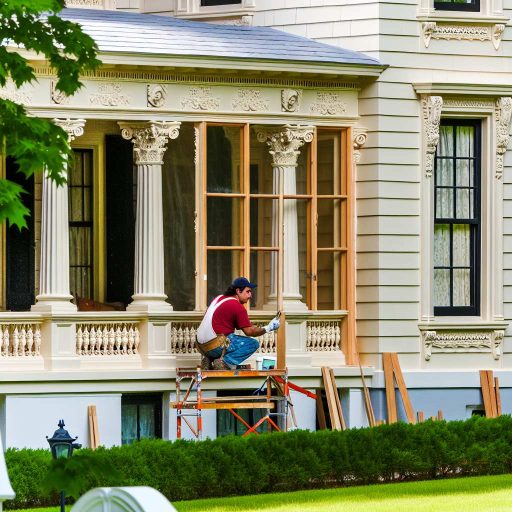




The Importance of Restoration and Preservation
Historical Significance of Historic Luxury Homes
Historic luxury homes represent the architectural artistry of past eras.
They reveal the social and cultural values of influential families.
Moreover, they showcase craftsmanship techniques that modern builders rarely use.
For instance, Greystone Manor, built in 1892, reflects Victorian elegance and design.
Such homes serve as tangible links to a community’s heritage and identity.
Evolution of Restoration and Preservation Efforts
Early preservation focused mainly on famous landmarks and public buildings.
Over time, experts recognized the value of restoring private luxury residences.
As a result, preservation practices evolved to include more delicate and specialized techniques.
Organizations like The Heritage Alliance of New England played a vital role in this shift.
They advocated for maintaining historical authenticity while adapting homes for modern use.
Benefits of Restoring and Preserving Luxury Homes
Restoration preserves the original character and architectural details of these estates.
Preservation also boosts local tourism by attracting history enthusiasts and professionals.
Furthermore, restored historic homes often increase in market value significantly.
They contribute to neighborhood stability and inspire community pride.
Lastly, preservation projects create jobs and encourage skilled craftsmanship.
Challenges Faced in Restoration Projects
Historic materials can deteriorate, requiring expert repair or replication.
Many homes pose structural challenges due to outdated construction methods.
Regulatory compliance with preservation laws and zoning adds complexity.
Project budgets may escalate because of unforeseen restoration needs.
Despite these obstacles, dedicated preservationists remain committed to their mission.
Understanding Historic Luxury Homes
Defining Characteristics
Historic luxury homes feature grandeur and exquisite craftsmanship.
They exhibit distinctive architectural details and rich materials.
Many showcase custom woodwork.
They include intricate moldings.
Artisan finishes enhance their appeal.
The grand scale often includes tall ceilings.
Spacious rooms add to their impressive presence.
Additionally, these homes present unique design elements.
These features are not found in modern buildings.
Large windows often serve as focal points.
Elaborate staircases attract visual interest.
Typically, these homes include expansive grounds.
Ornate landscaping complements the architecture.
Original features like fireplaces add charm.
Stained glass enhances the home’s uniqueness.
Hand-painted tiles contribute to the decor.
Preserving these details maintains authenticity.
It also preserves historical value.
Architectural Styles
Various architectural styles define historic luxury homes.
These styles vary across different regions.
- Victorian style emphasizes asymmetry.
- Decorative trim is a key feature.
- Vibrant colors add visual interest.
- Georgian homes display symmetry.
- They have classic proportions.
- Brick facades create a stately look.
- Tudor Revival includes steeply pitched roofs.
- Half-timbering details are common.
- Colonial Revival homes show balanced windows.
- Columned porches enhance the entrance.
- Italianate style features tall narrow windows.
- Elaborate cornices decorate the roofline.
- Craftsman homes highlight handcrafted wood.
- They include built-in furnishings.
- Mediterranean Revival showcases stucco walls.
- Red tile roofs complete the style.
Each style contributes unique charm to the home.
They provide historical context for the design.
Understanding these styles guides restoration efforts.
It ensures preservation is appropriate.
Assessing the Condition of Luxury Homes: Key Factors to Consider
Structural Integrity
Begin with a thorough inspection of the home’s foundation and frame.
Look for cracks, water damage, or signs of settling in the foundation.
Evaluate the condition of supporting beams and load-bearing walls carefully.
Additionally, check the roof structure for signs of leaks or deterioration.
Engage a structural engineer like Mason & Co. Structural Experts for evaluation.
Architectural Details and Materials
Identify original materials such as hardwood floors, moldings, and custom woodwork.
Assess the condition of plaster, stonework, and decorative finishes throughout the home.
Preserving these elements maintains historical authenticity and value.
Contact restoration specialists like Thornton & Sons for material conservation advice.
Mechanical Systems and Utilities
Inspect electrical wiring and plumbing for outdated or unsafe installations.
Upgrade HVAC systems while preserving historical features as much as possible.
Check for energy-efficient alternatives that blend seamlessly with the home’s style.
Consult companies such as Blackwell Mechanical Services for sensitive system upgrades.
Environmental and Site Conditions
Survey moisture levels around the property that could affect structural health.
Evaluate landscaping and drainage systems to prevent water damage to the foundation.
Consider the impact of surrounding trees and vegetation on the building’s exterior.
Coordinate with landscape architects like Millstone Preservation Gardens for site care.
Historical Documentation and Compliance
Gather all existing blueprints, permits, and previous restoration records.
Verify compliance with local historic preservation ordinances and regulations.
Work with legal experts such as Whitman Heritage Law Group to navigate approvals.
This ensures all restoration efforts meet required standards and guidelines.
Cost Estimates and Restoration Planning
Develop detailed cost projections for necessary repairs and preservation tasks.
Prioritize work based on severity and historical significance of each element.
Collaborate with firms like Carlton Restoration & Design for accurate budgeting.
Finally, create a phased restoration plan to manage resources effectively.
See Related Content: Navigating Legal And Zoning Considerations For US Penthouse Suites Investments
Restoration Techniques: Balancing Modern Needs with Historic Integrity
Understanding Historic Materials and Craftsmanship
Authenticity begins with recognizing original materials used in historic luxury homes.
Skilled craftsmen like Samuel Grayson specialize in traditional woodworking techniques.
They often replicate intricate moldings and paneling to match the home’s era.
Moreover, understanding period-specific paint formulations guides correct color reproduction.
This attention preserves the architectural character while upgrading surfaces.
Integrating Modern Amenities Without Disrupting Aesthetic
Incorporating modern systems requires careful planning to avoid visual clutter.
For instance, heritage restoration firm Ellison & Clarke hides HVAC components discreetly.
They use existing chases and walls to conceal ductwork and wiring.
Likewise, installing energy-efficient lighting involves replicating period-style fixtures.
Modern plumbing upgrading must preserve historic bathroom designs intact.
Therefore, specialists select fixtures that blend with original décor.
Preserving Structural Integrity Through Sensitive Upgrades
Historic foundations often need reinforcement to meet current safety standards.
Structural engineer Maria Cortez recommends minimally invasive techniques for this purpose.
For example, adding steel supports discreetly maintains the home’s bones.
Additionally, seismic retrofitting ensures the building withstands natural events.
These modifications honor the original framework while improving durability.
Use of Reversible and Non-Destructive Methods
Restoration experts always prioritize reversible methods whenever possible.
This allows future generations to reinterpret or undo changes if desired.
For example, temporary mounting adhesives replace permanent fasteners during wall restoration.
Also, surface cleaning uses gentle solvents that do not damage historic finishes.
Preserving original fabric means retaining the home’s authenticity and value.
Maintaining Historical Accuracy in Design Elements
Research is vital to authentically restore architectural details.
Consultants such as Fiona Penrose refer to archive photographs and original blueprints.
These resources ensure window designs and door hardware remain historically correct.
Custom fabricators then produce components matching the period’s style.
Furthermore, furniture and textile selections complement the home’s historical narrative.
Balancing Sustainability with Preservation Goals
Incorporating green technologies supports long-term preservation efforts.
For example, architect David Lin uses insulated glazing that mimics original window profiles.
This upgrade improves energy efficiency without altering visual aspects.
Similarly, solar panels can install inconspicuously on outbuildings or rear roofs.
Such strategies reduce environmental impacts while honoring historic values.
Energy-efficient climate control systems by Greenfield Mechanical enable comfortable living.
Communicating with Preservation Authorities and Stakeholders
Restoration projects must comply with local historic preservation regulations.
Project manager Elaine Kim facilitates collaboration with city heritage commissions.
Her team prepares detailed documentation and plans for approvals.
Transparent communication ensures project alignment with preservation goals.
It also secures community support and access to potential preservation grants.
Best Practices for Ongoing Maintenance and Care
Restored homes require regular upkeep to protect their investment.
Conservator James Fairchild emphasizes routine inspections of wood and masonry.
Timely repairs prevent minor issues from becoming major damages.
Property owners receive customized maintenance schedules tailored to their historic home.
Additionally, trained maintenance staff understand the sensitivity of historic materials.
Such ongoing care preserves the luxury and historical essence for generations.
Find Out More: Understanding Exclusive Security And Privacy In Gated Luxury Communities
Materials and Resources for Authentic Restoration
Sourcing Original Elements
Authentic restoration relies heavily on sourcing original elements.
These materials preserve the character and historical value of luxury homes.
Expert contractors like Heritage Renovations specialize in locating rare period materials.
Additionally, salvaging architectural elements from dismantled historical buildings provides unique resources.
Restorers often seek out reclaimed wood, decorative plasterwork, and vintage hardware.
Furthermore, antique markets and specialized auction houses serve as key sources.
For instance, Beaumont Antiques consistently offers original fixtures and fittings from the late 19th century.
Working with Skilled Suppliers
Partnering with skilled suppliers ensures authenticity and quality.
Woodwrights of Charleston provides custom-milled lumber matching historical specifications.
Likewise, Mason & Clay specialize in period-accurate bricks and tiles.
Moreover, reliable suppliers verify provenance and craftsmanship of their products.
Such partnerships enable restorers to maintain the home’s original design intent.
Utilizing Modern Resources to Replicate Originals
Sometimes, original elements are unavailable or severely damaged.
In these cases, modern technology aids in faithful reproduction.
High-resolution 3D scanning recreates intricate moldings and carvings precisely.
Additionally, craftsmen use traditional tools combined with modern methods for accuracy.
Companies like Artisan Reproductions produce custom hardware indistinguishable from originals.
Assessing Material Compatibility and Longevity
Choosing materials compatible with existing structures prevents future deterioration.
Architectural historian Emily Bradford stresses careful evaluation of material properties.
Some modern substitutes may harm original fabrics due to differing expansion rates.
Therefore, restorers conduct extensive testing before final selection.
When properly matched, new materials extend a historic home’s lifespan significantly.
Resources for Authentic Paints and Finishes
Authentic paints and finishes enhance historical accuracy dramatically.
Specialty manufacturers like Colonial Colors offer formulations based on historical recipes.
These paints use traditional pigments and binders for the correct texture and sheen.
Restorers must also replicate aging effects by applying glazes or patinas carefully.
Through this process, finishes blend seamlessly with surviving original surfaces.
Networks and Associations Supporting Restoration
Restoration professionals benefit from industry networks and associations.
The National Alliance of Preservation Commissions connects suppliers, contractors, and owners.
Such organizations provide access to verified sources of authentic materials.
They also offer educational resources about best restoration practices.
Joining these networks fosters collaboration and resource sharing across projects.
Uncover the Details: Exploring HOA Fees And Vital Maintenance Essentials In Luxury High-Rise Condos
Legal and Regulatory Considerations
Understanding Historic Preservation Laws
Historic preservation laws protect properties with cultural and architectural significance.
They ensure that restoration work maintains the home’s historical integrity.
Local, state, and federal regulations often interact in managing these laws.
For example, the National Register of Historic Places provides federal recognition.
However, being listed does not automatically restrict alterations.
Local ordinances usually carry the most weight in controlling renovations.
Therefore, research local historic district rules early in your project.
These laws aim to balance preservation with property owners’ rights.
Securing Necessary Permits and Approvals
Obtaining permits is mandatory before beginning restoration work on historic homes.
Start by contacting the local historic preservation commission in your area.
They provide guidelines on acceptable materials and methods.
Moreover, they approve or deny proposed changes to the property.
You often must submit detailed plans illustrating your restoration approach.
Consult architect Laura Baines, who specializes in historic home permits.
For extensive projects, you might need both building and preservation permits.
Be patient, as approval processes can take several weeks or months.
Working with Preservation Professionals and Authorities
Collaborate with qualified preservation architects and contractors experienced in historic homes.
They understand legal constraints and best restoration practices.
For instance, Heritage Restorations LLC offers consulting on compliance and design.
Engage early with local preservation officers like compliance specialist Richard Mellon.
They can provide valuable insight and avoid costly regulatory errors.
Regular communication helps ensure your project meets legal standards.
It also facilitates smooth inspections and final approvals.
Common Restrictions and Requirements in Historic Districts
Historic districts typically impose strict controls on exterior changes.
These include roof materials, window styles, and paint colors.
Interior changes may also require review if they affect historical elements.
Additionally, modern upgrades might need discreet integration to preserve aesthetics.
Historic easements can limit demolition or subdivision of the property.
You are often required to use period-appropriate materials and techniques.
Such regulations protect the neighborhood’s overall historic character.
Financial Incentives and Support for Preservation Projects
Many governments offer grants, tax credits, or low-interest loans for preservation projects.
The State Historic Preservation Office in New Mexico provides tax incentives for restorations.
Federal Historic Tax Credits can cover up to 20% of qualified expenses.
Nonprofit organizations may also provide financial assistance and technical advice.
Investigator and consultant Diana Reynolds recommends exploring all available aid options.
Applying for incentives requires strict adherence to preservation standards.
These financial supports can significantly ease the burden of costly restorations.
Gain More Insights: Preservation Techniques For Historic Luxury Homes In The American Landscape
Financial Aspects
Funding Options for Historic Restoration
Restoring historic luxury homes requires significant financial resources.
Luckily, several funding options exist to support these projects.
Private loans are a common choice among homeowners and preservationists.
Local banks such as Heritage Trust Bank offer specialized loans for historic properties.
Homeowners can also explore home equity lines of credit for additional funds.
Additionally, some nonprofit organizations provide grants for preservation efforts.
The Preservation Alliance Foundation offers competitive grants for luxury home restorations.
Furthermore, crowdfunding platforms enable owners to raise funds from supporters.
Platforms like FundHistoric bring together donors passionate about architectural heritage.
Incentives for Historic Restoration
Governments encourage restoration through multiple tax incentives and benefits.
The Federal Historic Preservation Tax Credit offers a 20% credit on qualified restoration expenses.
State programs can provide additional credits or rebates to homeowners.
For example, the Virginia Department of Historic Resources grants tax relief for eligible projects.
Local municipalities may also reduce property taxes temporarily during restoration.
New Orleans offers abatements that ease tax burdens for luxury home renovators.
Moreover, some cities expedite permitting for historic restorations, saving time and money.
Owners should consult with tax experts like Eleanor Chambers to maximize available incentives.
Working with Financial Advisors and Preservation Experts
Engaging financial advisors experienced in historic properties streamlines project budgeting.
Advisors such as Marcus Whitfield specialize in blending preservation needs with fiscal planning.
Moreover, preservation consultants guide owners on eligible funding and compliance requirements.
Companies like Legacy Preservation Consulting help navigate complex historic restoration laws.
Collaboration between financial and preservation experts ensures secure and compliant funding.
Finally, continuous communication minimizes unexpected costs during restoration phases.
Additional Funding Resources
Historic tax credits can transfer to investors for upfront capital through syndication.
Specialized real estate investment firms like Evergreen Heritage Partners facilitate such deals.
Community Development Financial Institutions (CDFIs) provide low-interest loans to preservation groups.
The National Trust Community Investment Corporation is a leading CDFI in this sector.
Philanthropic donations and sponsorships also supplement restoration budgets effectively.
The Madison Family Foundation regularly supports historic home preservation grants.
Combining multiple funding sources enhances financial stability for restoration projects.
Case Studies: Successful Restoration Projects of Historic Luxury Homes
Revitalizing the Windemere Estate
The Windemere Estate was built in 1892.
It stands as a testament to Victorian architecture.
In 2018, Heritage Restorations undertook its meticulous renovation.
First, the team assessed structural weaknesses throughout the property.
They reinforced the original wooden beams using modern but discreet techniques.
Artisans restored hand-carved moldings with historically accurate materials.
Furthermore, the estate’s remarkable stained glass windows were carefully cleaned and repaired.
The restoration team also upgraded the mechanical systems to meet current standards.
They did so without altering appearances.
Consequently, the Windemere Estate now beautifully combines historical integrity with modern functionality.
Preserving the Marlowe Mansion’s Timeless Elegance
The Marlowe Mansion is set in Charleston.
It showcases early 20th-century neoclassical design.
Richmond Preservation Group started restoration in 2020.
They collaborated with experts in period-appropriate plaster work.
Carefully, the team removed layers of modern paint to reveal original frescoes.
Moreover, intricate marble fireplaces were repaired and polished to their original luster.
Electrical wiring was replaced to ensure safety while concealing modern components.
The team also landscaped the gardens to reflect the mansion’s original plans accurately.
As a result, the Marlowe Mansion now offers an authentic glimpse into its historic grandeur.
Restoring the Briarcliff Villa to Its Former Glory
Constructed in 1924, Briarcliff Villa exemplifies Mediterranean Revival style.
Sunrise Heritage Contractors initiated the restoration in 2019.
The project began with a detailed survey of the villa’s terracotta roof tiles.
Damaged tiles were replicated by skilled craftsmen using period techniques.
Inside, original wood paneling underwent careful stripping and refinishing.
The team restored wrought iron railings using rust-proofing and gentle cleaning methods.
Additionally, original decorative tiles in the entryway were reinstalled to preserve authenticity.
Finally, the villa now attracts visitors eager to experience its historic charm firsthand.
Enhancing the Charlton Manor’s Architectural Heritage
Charlton Manor represents early Colonial Revival architecture built in 1910.
Oakwood Restoration Collective led its rejuvenation starting in 2021.
They repaired foundation settling issues with minimal disruption to original materials.
Historical paint colors were identified through analysis and carefully reapplied.
The team also refurbished classic sash windows to improve energy efficiency.
Elegant French doors were reconditioned while preserving their hand-forged hardware.
The nearby carriage house underwent adaptive reuse as a guest cottage with period style.
Thus, Charlton Manor now stands preserved for future generations to admire.
Renewing the Beaumont Hall with Sustainable Practices
Beaumont Hall dates back to 1905.
It is known for its Beaux-Arts design elements.
Greenline Restoration Specialists embraced this project in 2022.
They integrated eco-friendly materials while respecting historical accuracy.
The restoration included reinstating limestone facade details using sustainable sourcing.
Original hardwood floors were refinished with non-toxic sealants.
Upgraded HVAC systems now provide comfort with minimal environmental impact.
Additionally, rainwater harvesting was subtly incorporated into the landscape design.
This project balances preservation with modern sustainability effectively.
Community Involvement and Education
Building Strong Connections with Local Stakeholders
Engaging the community strengthens preservation initiatives.
Local residents often hold valuable knowledge about historic luxury homes.
Therefore, establishing open communication channels is essential.
Preservation groups can organize town hall meetings and workshops.
These events encourage dialogue and foster involvement.
Collaboration with neighborhood associations boosts collective efforts.
Moreover, partnering with local businesses increases resource availability.
For example, Oakridge Renovations sponsors educational events in Maple Grove.
Educational Programs to Raise Awareness
Education is key to sustaining long-term preservation.
Schools can integrate local history into their curricula.
This approach inspires younger generations to value historic homes.
The Maplewood Historical Society hosts monthly seminars on restoration techniques.
Additionally, guided tours help visitors appreciate architectural details.
Public libraries provide resources on preservation best practices.
Digital platforms also offer webinars for wider outreach.
Engaging Diverse Community Groups
Inclusive participation enriches preservation efforts.
Community leaders should reach out to cultural organizations.
This outreach honors the varied histories connected to luxury homes.
Faith-based groups often contribute volunteer manpower and space.
Senior centers can host storytelling sessions highlighting historical narratives.
Furthermore, youth clubs may assist with beautification projects.
These activities build pride and a sense of ownership among participants.
Collaborative Preservation Initiatives
Joint efforts lead to more effective results.
The Elmwood Preservation Trust collaborates with local craftsmen and historians.
They host annual restoration festivals that draw broad community interest.
Volunteer programs offer hands-on experience in conservation techniques.
Fundraising events support ongoing maintenance and educational outreach.
Social media campaigns increase visibility and encourage participation.
Ultimately, shared goals foster a united effort to preserve heritage homes.
Future Trends in Restoration and Preservation
Innovations in Historic Home Care
Advanced Materials and Techniques
Restorers now use nanotechnology for stronger, more durable finishes.
These materials protect original surfaces without altering appearance.
Moreover, 3D printing helps recreate intricate architectural details precisely.
Specialists at HeritageCraft Innovations pioneered custom molds for missing components.
This approach significantly reduces restoration time and cost.
Smart Home Integration with Historical Integrity
Experts integrate discreet sensors to monitor structural health in real-time.
For instance, VintageTech Solutions developed wireless systems compatible with delicate interiors.
These upgrades enhance safety while preserving aesthetic authenticity.
Additionally, energy-efficient climate controls maintain original wood and plaster conditions.
Grace Williamson, a restoration consultant, emphasizes balancing modern tech and historical value.
Sustainable Preservation Practices
Green restoration minimizes environmental impact during preservation projects.
Companies like Evergreen Heritage specialize in using recycled and eco-friendly materials.
They also employ low-VOC paints that protect both inhabitants and the environment.
Meanwhile, solar energy systems are subtly integrated into historic roofing.
Such innovations extend the longevity of historic homes responsibly and efficiently.
Collaborative Digital Platforms and Virtual Tools
Digital Documentation and Archiving
Advanced scanning generates precise 3D models of historic properties.
Architectural historian Lucas Merritt uses these models for planning restorations accurately.
These digital archives ensure long-term preservation of design details.
Furthermore, cloud databases allow multidisciplinary teams to collaborate seamlessly.
This innovation reduces errors and helps track restoration progress in real-time.
Virtual Reality for Client Engagement
Virtual reality tours empower homeowners to visualize restoration outcomes beforehand.
Legacy Restorations implemented VR to showcase design options for the Whitmore estate.
This technology improves decision-making and client satisfaction substantially.
Furthermore, VR training modules prepare craftsmen for authentic restoration techniques.
Such immersive experiences maintain craftsmanship quality and historical accuracy.
Enhanced Regulatory and Financial Support
Streamlined Permitting Processes
Local governments now adopt digital platforms for faster historical property approvals.
Architectural advisor Emily Tran highlights how this change accelerates project timelines.
Consequently, restorers spend less time on paperwork and more on quality work.
These systems also ensure compliance with preservation standards effectively.
Innovative Funding and Incentives
New grant programs encourage restoration using cutting-edge technologies.
The Heritage Preservation Foundation recently launched the Innovate Restore Fund.
This initiative supports projects employing sustainable materials and smart systems.
Additionally, tax incentives motivate homeowners to invest in careful upkeep.
Financial experts like Marcus Delaney assist clients in maximizing available benefits.
Additional Resources
Americans with Disabilities Act Title II Regulations | ADA.gov
The 4 Major Benefits of Historic Restoration and Preservation …