


Down payment assistance repayment depends on the instrument and the event, not the size of the award. A gift, a conditionally forgivable second mortgage and a deferred junior loan can look similar at closing but leave different obligations later. Our event register helps a reader ask for the controlling contract and a written determination.
Two fictional $10,000 instruments show the distinction. A year-five sale requires $10,000 under both stipulated terms. At a later sale, after verified forgiveness and release for A, A requires $0 while deferred instrument B still requires $10,000. Both examples assume zero interest solely to isolate the contract difference. They are not real program quotes.
What the new FHA assistance figures measure
HUD’s FY2026 annual report, released in November, reports assistance on 44.47% of forward purchase endorsements with source data. Table B-17 lists eligible family at 23.12%, government at 19.99%, non-government/non-relative at 1.36% and none at 55.53%. Cases missing assistance-source data are excluded. The denominator is not all US purchasers or all FHA mortgages.
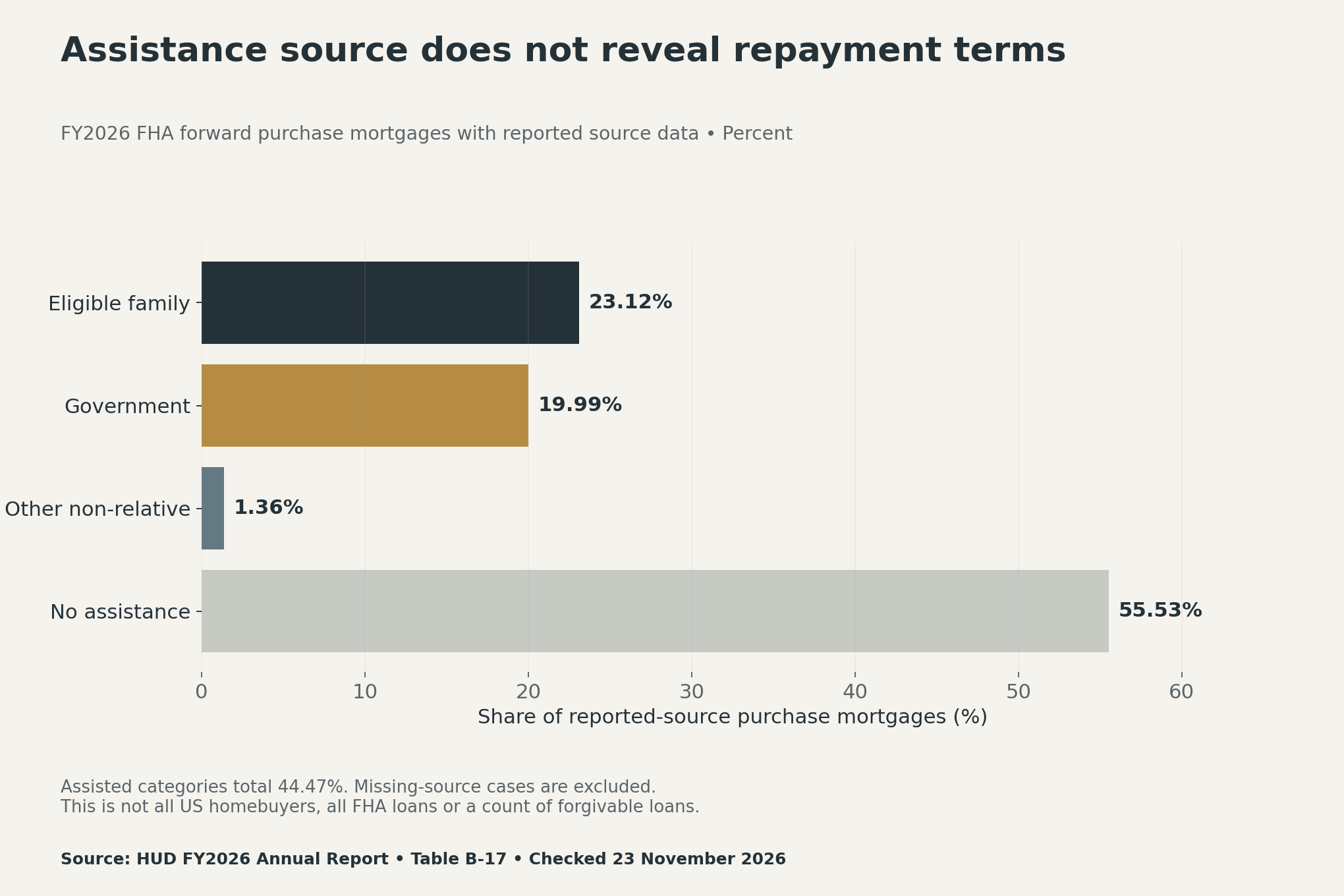
The report is a reason to ask better questions about assistance, rather than evidence that program terms changed this month. A source category does not tell us whether a particular obligation accrues interest, requires repayment at sale or can remain behind a refinanced first mortgage. Those answers come from another evidence set.
Find the exact assistance instrument first
Start with the note, security instrument, assistance agreement and current servicing information. Record the named route and document date. Then identify whether the help was a gift, grant or loan and whether forgiveness depends on conditions. A marketing phrase such as deferred or forgivable does not supply every clause needed for a later transaction.
The OHFA government-program guide, page 7, describes a seven-year second loan for named routes, including First Time Homebuyer, FTHB Edge, Next Home and Ohio Heroes. It states full repayment if sold or refinanced within seven years, with forgiveness and lien release on the seventh anniversary. Other OHFA products have different terms; this is not a national rule.
The CalHFA MyHome handbook, revised October 19, 2026, describes a deferred-payment, simple-interest subordinate loan. Its listed payoff triggers include sale, title transfer, first-loan payoff, refinance and a recorded Notice of Default unless rescinded. Our zero-interest fictional B is not a MyHome payoff estimate. A real balance may include accrued interest and other applicable amounts.
Compare events using clearly fictional terms
In our matched illustration, A and B each begin at $10,000. Neither accrues interest or fees in the model. A has a stipulated seven-year cliff: all forgiveness conditions must be met and the release documented. B has no forgiveness clause and requires full repayment on sale. We are holding the amount constant to make the effect of the instrument visible.
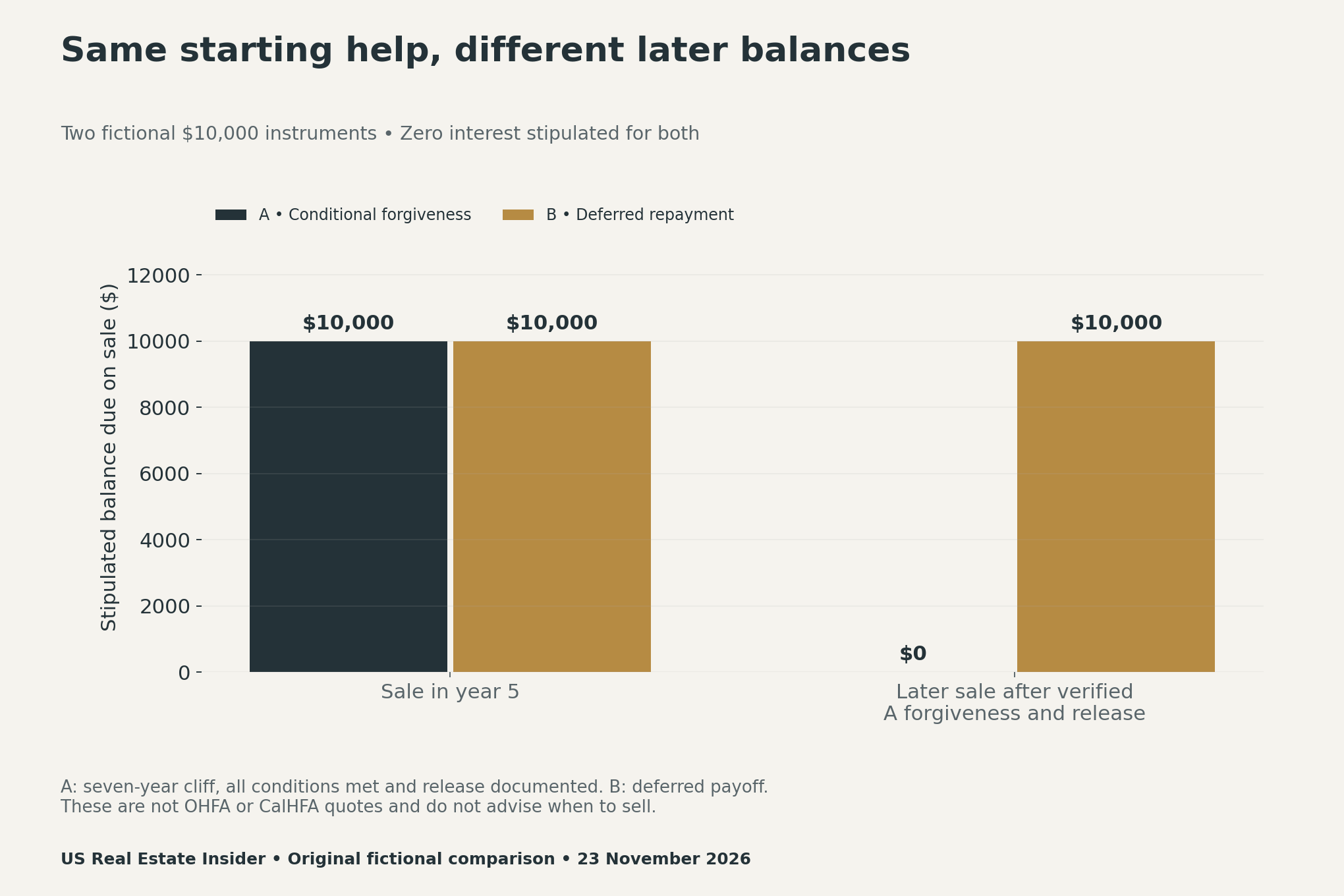
The year-five result is identical even though one instrument carries the word forgivable. At the later modeled event, that word matters only because its conditions have been fulfilled and the release confirmed. A calendar anniversary alone should not be treated as a substitute for the written evidence applicable to a real loan.
A refinance question needs its own answer
The OHFA lender FAQ describes possible subordination for a seven-year assistance second through its specific Refinance Program. It says assistance is otherwise due in full at refinance. That narrow exception must stay next to the general guide language. It does not establish that every refinance, lender or assistance route receives subordination.
Subordination means the junior lien may remain behind a new first mortgage under approved terms. It does not mean the balance disappears. Ask the authorized servicer or program administrator for a current written payoff statement or a written subordination decision for the exact transaction. Do not infer either result from a program name or this comparison.
Use a trigger register instead of a promise
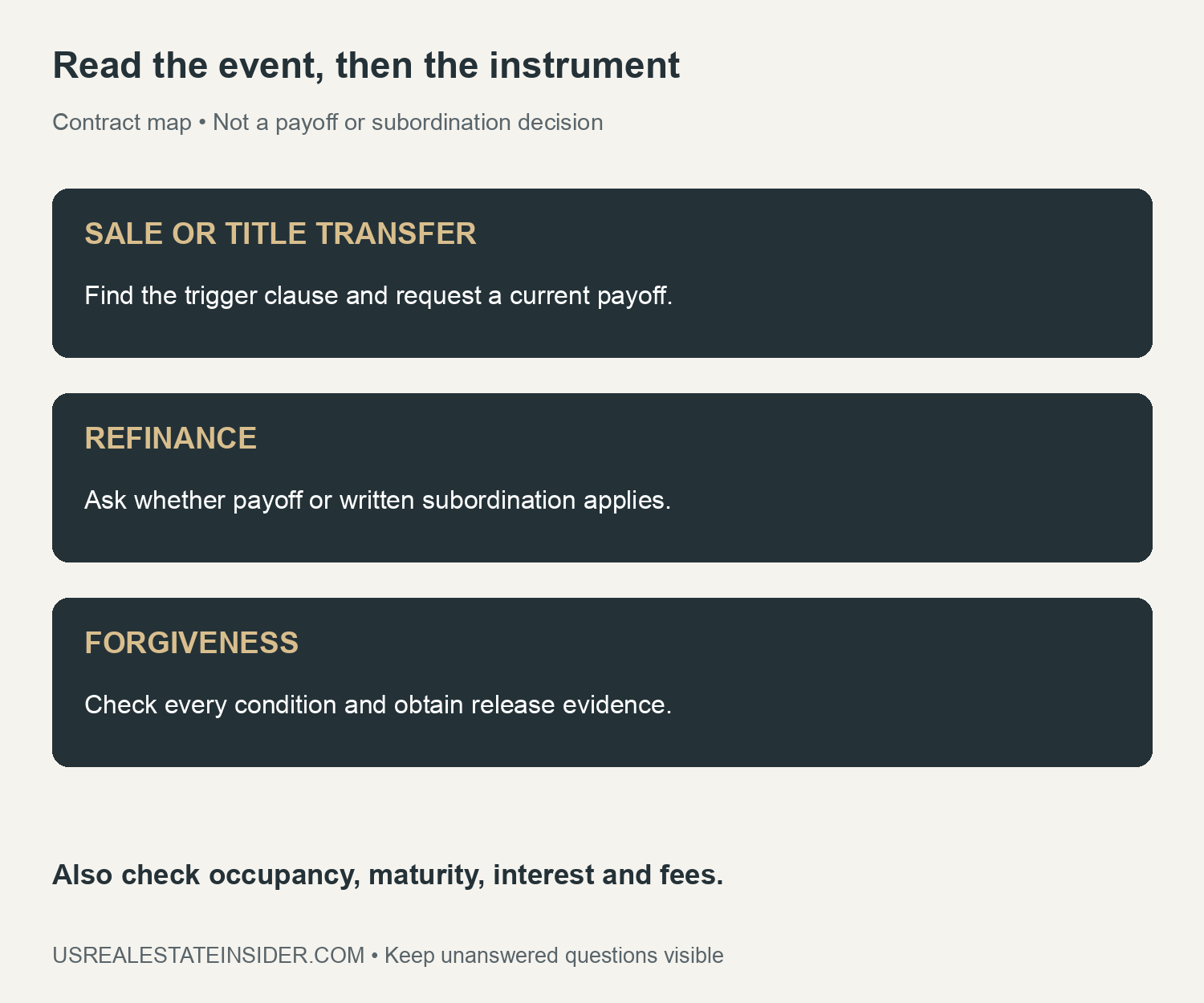
For every row, record the relevant clause, the question asked, the date of the authoritative answer and what remains unresolved. Include sale, refinance, occupancy change, title transfer and maturity. Keep balance calculation and lien release as separate fields. A blank answer means unconfirmed; it does not mean zero is due or permission has been granted.
Our builder-credit comparison separates cash paid from borrowing cost. The same habit helps here: a lower initial cash requirement and a future repayment obligation answer different questions. Our FHA record map likewise keeps source evidence separate from an individual outcome.
Methods, limits and reusable downloads
Research checked November 23, 2026. We transcribed the four FY2026 categories from HUD Table B-17 and checked that they total 100%. We read the named OHFA guide, its refinance FAQ and CalHFA’s handbook. The two sale scenarios are original, stipulated examples with no real borrower, property, payoff or subordination request assessed.
This is a limited educational comparison, not a complete program directory, eligibility decision or advice on when to sell or refinance. Program versions and signed instruments matter. Review the current documents with the authorized administrator and a qualified housing counselor or other professional appropriate to the transaction. The four CSVs keep reported evidence and fictional arithmetic separate.
- FHA reported-source shares (CSV)
- Fictional sale-event comparison (CSV)
- Blank assistance trigger register (CSV)
- Primary-source and contract-scope register (CSV)
Suggested citation: US Real Estate Insider, “Down Payment Assistance: What Happens When You Sell or Refinance?”, November 23, 2026. Credit HUD, OHFA and CalHFA for the source material; the fictional comparison and blank register are original tools.