



Introduction to Eco Friendly Practices in Luxury Gated Communities
Luxury gated communities increasingly prioritize eco friendly practices.
Developers recognize the environmental impact of large residential projects.
Therefore, they adopt sustainable methods to reduce their carbon footprint.
Growing Importance of Sustainability
As a result, these communities attract environmentally conscious homeowners.
Luxury developments focus on conserving natural resources and promoting green living.
They aim to enhance energy efficiency and reduce waste generation.
Key Environmental Goals
Moreover, they seek to preserve local ecosystems and water quality.
Consequently, these goals improve residents’ quality of life and community value.
Many gated communities use solar panels for clean energy generation.
Common Eco Friendly Features
In addition, rainwater harvesting systems reduce reliance on municipal water.
Landscaping with native plants minimizes irrigation and supports biodiversity.
Furthermore, energy-efficient appliances and LED lighting lower overall consumption.
Collaborations to Promote Green Living
Developers often partner with environmental firms like GreenStone Solutions.
They also consult experts such as architect Olivia Martinez to design sustainable homes.
These collaborations ensure the effective integration of eco friendly innovations.
Consequently, they contribute to creating healthier and more resilient communities.
Benefits of Sustainable Development in High End Real Estate
This article outlines benefits of sustainable development in high end real estate.
It highlights environmental, economic, social, and lifestyle advantages.
Readers will find focused points per section to inform decisions.
Environmental Advantages
Sustainable development reduces the environmental footprint of luxury communities.
Moreover, it preserves natural habitats and promotes biodiversity inside gated neighborhoods.
Additionally, it conserves water and lowers energy consumption through efficient systems.
It also minimizes waste by encouraging recycling and reuse practices.
Economic Benefits
Eco friendly practices raise property values and attract discerning buyers.
Consequently, residents benefit from lower utility expenses over time.
Investors often see stronger long term returns from sustainable real estate projects.
Furthermore, sustainability certifications boost a community’s reputation in the market.
Enhanced Quality of Life
Residents enjoy better air quality and healthier living environments.
Green spaces and natural landscaping support improved mental well being and social engagement.
In addition, quieter streets reduce pollution and enhance neighborhood tranquility.
Designs that use natural lighting and ventilation increase daily comfort for residents.
Positive Social Impact
Sustainable developments foster responsible community values and environmental awareness.
They motivate residents to join conservation initiatives and collaborate locally.
Often, these projects support local economies by sourcing materials and labor locally.
Ultimately, such developments set benchmarks for responsible practices that other developers may follow.
Key Features of Eco Friendly Luxury Homes
This content highlights specific features of eco friendly luxury homes.
It covers energy, water, indoor air, smart systems, and landscaping.
Each section lists design elements and technologies used in these homes.
Energy Efficiency and Sustainable Materials
Eco friendly luxury homes incorporate advanced energy efficient systems.
They use sustainable materials like bamboo, reclaimed wood, and recycled metal.
Moreover, these materials reduce the environmental footprint during construction.
Highly efficient LED lighting and smart thermostats lower energy consumption.
Solar panels provide renewable energy to supplement traditional power sources.
Water Conservation and Management
Water conservation features are integral to eco friendly luxury homes.
Low-flow fixtures and dual-flush toilets reduce water usage effectively.
Engineers design rainwater harvesting systems to collect and reuse water.
This water serves landscaping needs and lessens municipal supply dependence.
Furthermore, smart irrigation systems adjust watering schedules based on weather.
Indoor Environmental Quality
Maintaining high indoor environmental quality enhances resident health and comfort.
These homes utilize low-VOC paints and adhesives to improve air quality.
They feature advanced ventilation systems that circulate fresh air efficiently.
The strategic use of natural light reduces reliance on artificial lighting.
Additionally, green walls and indoor plants help purify the air naturally.
Smart Home Technologies for Sustainability
Smart technologies increase sustainability by optimizing resource use.
Systems by companies like GreenTech Innovations automate lighting and temperature control.
They provide real-time energy and water usage data to homeowners.
Homeowners can adjust settings remotely using mobile apps by EcoSmart Solutions.
This digital integration promotes conscious consumption and convenience.
Landscape Design and Biodiversity
Eco luxury communities emphasize native landscaping that supports local biodiversity.
Landscapers from Verdant Designs prioritize drought resistant and pollinator friendly plants.
They create natural habitats that attract birds, bees, and butterflies.
Permeable pavements and green roofs manage stormwater runoff effectively.
These features enhance environmental resilience and visual appeal simultaneously.
Explore Further: Exploring The Benefits And Lifestyle Of Gated Communities In Luxury Real Estate
Case Studies of Successful Eco Friendly Gated Communities
This page lists three eco friendly gated community case studies.
Each case study highlights sustainable features and developer partnerships.
Readers can compare energy, water, landscaping, and transport approaches.
Green Haven Estates
Green Haven Estates showcases the integration of sustainable living with luxury amenities.
The development utilizes solar energy panels across all residences and common areas.
Additionally, the community employs advanced water recycling systems to reduce consumption.
Green Haven Estates collaborates with TerraBuild, a renowned eco-conscious developer.
This partnership ensures ongoing innovations in energy efficiency and waste management.
Moreover, native landscaping reduces irrigation needs while supporting local biodiversity.
Residents benefit from electric vehicle charging stations, promoting clean transportation.
The community’s design reduces its carbon footprint significantly compared to similar developments.
Furthermore, Green Haven Estates won the Sustainable Communities Award in 2022.
Silver Oak Enclave
Silver Oak Enclave exemplifies eco-friendly luxury with its comprehensive green infrastructure.
The gated community integrates smart home technology to optimize energy use.
Moreover, the incorporation of geothermal heating lowers reliance on fossil fuels.
Silver Oak partnered with EcoVista Developers, pioneers in sustainable urban planning.
They implemented permeable pavements to improve stormwater management and reduce runoff.
The enclave includes community gardens that encourage organic farming and social engagement.
Additionally, rigorous construction waste recycling minimizes landfill contributions.
Residents enjoy electric golf carts, minimizing emissions inside the community instead of gas-powered vehicles.
Finally, Silver Oak Enclave achieved LEED Platinum certification for neighborhood development.
Willow Creek Residences
Willow Creek Residences balances luxury living with responsible environmental stewardship.
The development features energy-efficient LED lighting and high-performance building envelopes.
It also uses rainwater harvesting systems to supply irrigation and reduce water waste.
GreenFields Inc., a leader in eco-friendly developments, oversaw its master planning and construction.
The community prioritizes walkability, reducing residents’ dependence on personal vehicles.
Additionally, Willow Creek has extensive bike paths encouraging low-impact transportation.
Sun-powered street lighting enhances safety while minimizing energy use at night.
Landscaping uses drought-resistant plants to conserve water across public and private spaces.
The community regularly hosts environmental awareness events to engage residents actively.
Explore Further: Predicting Long-Term Resale Potential For Prime Luxury High-Rise Condominiums
Challenges and Barriers to Implementing Green Practices
This section covers challenges and barriers to implementing green practices.
Developers face financial, technical, regulatory, and operational hurdles.
Community perception and supply chain issues also affect adoption.
Financial Constraints
Luxury gated community developers often face high upfront costs for eco-friendly technologies.
Moreover, sustainable materials tend to be more expensive than conventional options.
Investors may hesitate due to uncertain short-term returns on green investments.
Therefore, budget limitations frequently delay the adoption of sustainable designs.
Technical and Design Difficulties
Incorporating green technologies requires specialized knowledge that many firms lack.
Often, developers encounter issues integrating renewable energy sources within existing infrastructure.
Furthermore, green building techniques may conflict with luxury aesthetic expectations.
Consequently, architects must balance sustainability with high-end design features.
Regulatory and Approval Challenges
Environmental regulations vary widely across regions, complicating compliance for developers.
Besides that, lengthy approval processes can stall sustainable project timelines.
Additionally, local zoning laws might restrict renewable energy installations.
Thus, navigating the regulatory landscape demands extensive planning and legal support.
Community Perception and Buy-In
Residents may resist eco-friendly changes due to unfamiliarity or perceived inconvenience.
In many cases, homeowners prioritize luxury over environmental benefits.
Effective communication is necessary to demonstrate long-term advantages of green living.
Ultimately, gaining community support is crucial for successful sustainability initiatives.
Maintenance and Operational Challenges
Green technologies often require specialized maintenance not readily available locally.
Moreover, some sustainable systems involve complex operational procedures.
Staff training is essential to ensure proper upkeep of eco-friendly installations.
Otherwise, poor maintenance can reduce system efficiency and increase costs.
Supply Chain and Material Availability
Accessing high-quality sustainable materials is often limited by supply chain constraints.
Manufacturing delays and shortages can disrupt construction schedules significantly.
Local sourcing remains a challenge for many eco-friendly building components.
Therefore, developers must plan carefully to secure necessary green resources.
Balancing Luxury Standards with Sustainability
High-end clients expect premium amenities that sometimes conflict with eco-friendly goals.
For instance, large swimming pools and extensive landscaping increase resource consumption.
At the same time, innovative solutions must maintain luxury living standards.
Hence, designers are tasked with creating elegant yet sustainable environments.
Discover More: Enhancing Security Measures For Peace Of Mind In Luxury High-Rise Living
The Role of Technology in Promoting Sustainability
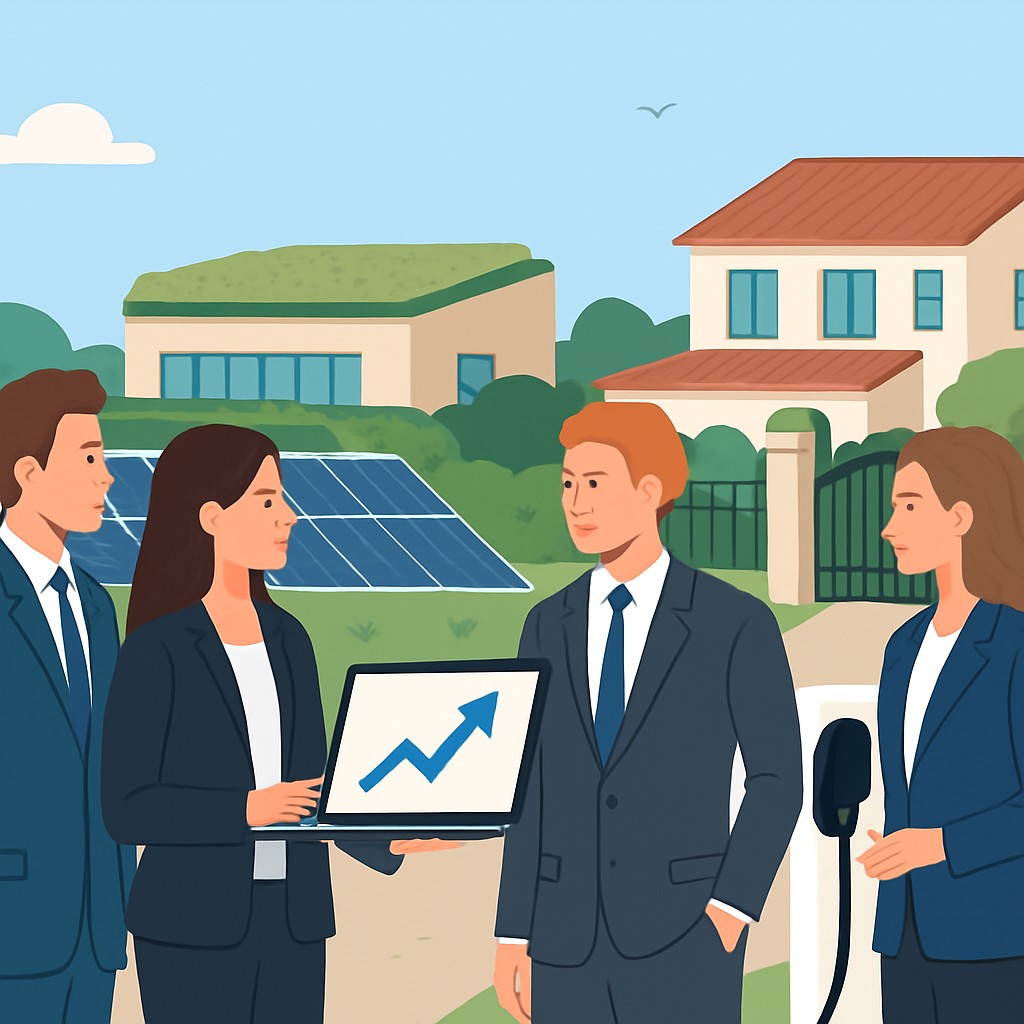
Luxury gated communities increasingly rely on smart energy management systems.
The Internet of Things plays a vital role in modern sustainability efforts.
Data analytics tools provide valuable insights into resource consumption patterns.
Smart Energy Management Systems
These systems monitor and optimize energy usage in real time.
Consequently, residents benefit from reduced utility costs and environmental impact.
GreenCore Technologies provides intelligent solutions tailored for upscale developments.
Advanced Water Conservation Techniques
Water conservation remains a critical focus in sustainable luxury communities.
Smart irrigation systems adjust watering schedules based on weather and soil moisture.
Additionally, greywater recycling technologies recycle household water for outdoor use.
Integration of Renewable Energy Sources
Incorporating renewable energy sources reduces carbon footprints significantly.
Solar panels and wind turbines increasingly power community amenities and homes.
EcoVista Developments installs hybrid systems to ensure consistent energy supply.
IoT and Connected Devices for Sustainability
Connected devices allow remote monitoring and control of energy and water usage.
For instance, LuminaTech offers IoT-enabled sensors that enhance building efficiency.
These technologies enable predictive maintenance to reduce waste and repair costs.
Data Analytics and Sustainability Reporting
EcoSmart Analytics helps communities monitor sustainability progress in real time.
These reports support transparency and informed decision-making among stakeholders.
Therefore, community managers can implement targeted improvements promptly.
Uncover the Details: Maximizing Expansive Skyline Views And Privacy In Upscale High-Rise Condos
Marketing Strategies for Eco Conscious Luxury Developments
Luxury developers must clearly identify their target audience.
They target affluent buyers who value sustainable living.
Marketing should emphasize environmental benefits and exclusivity.
Targeting the Eco-Conscious Buyer
They focus on affluent buyers who prioritize sustainable living.
Additionally, these buyers seek properties with green certifications.
Moreover, eco-conscious buyers appreciate transparent communication about building practices.
Leveraging Digital Platforms and Storytelling
Developers use immersive websites to showcase eco-friendly features.
Virtual tours highlight energy-efficient systems and natural landscaping.
Moreover, storytelling connects buyers emotionally to the community.
Collaborations with Environmental Experts
Partnering with environmental consultants strengthens credibility.
These experts validate green credentials and sustainable innovations.
Developers share case studies and whitepapers co-created with specialists.
Highlighting Long-Term Financial Benefits
Marketing also underscores savings from energy-efficient technologies.
Reduced utility bills appeal to buyers valuing both luxury and practicality.
Warranty programs on eco-installations assure quality and future maintenance.
Engaging the Community through Events
Developers host eco-focused events to educate and inspire prospects.
Workshops, green fairs, and sustainability tours attract interested buyers.
These gatherings foster a sense of belonging and shared values.
Utilizing Certifications and Awards
Recognition through green building certifications enhances market positioning.
Marketing highlights LEED, WELL, or Living Building Challenge achievements.
Industry awards for sustainability add prestige and proof of commitment.
Personalized Client Communication
Sales teams receive training on sustainability topics to better assist clients.
They address specific eco queries and tailor presentations accordingly.
Follow-up communications include updates on community environmental initiatives.
Future Trends in Eco Friendly Practices for Gated Communities
This article explores emerging eco friendly practices for gated communities.
Developers and residents increasingly adopt sustainable measures to reduce environmental impact.
The following sections describe notable trends and participating organizations.
Integration of Smart Technology
Smart technology increasingly boosts energy efficiency in gated communities.
Developers like GreenTech Innovations lead in implementing smart energy grids.
Moreover, smart sensors optimize water usage in landscaping and irrigation systems.
Consequently, residents experience lower utility costs and reduced environmental impact.
Emphasis on Renewable Energy Sources
Solar power installations grow popular in luxury gated developments.
For instance, SunWave Solutions partners with communities to deploy rooftop solar panels.
Additionally, wind turbines supplement energy supplies in suitable locations.
As a result, communities significantly decrease reliance on fossil fuels.
Advanced Waste Management Systems
Efficient waste separation and recycling improve sustainability within gated areas.
EcoCycle Services offers automated waste sorting technologies for residential use.
These systems facilitate composting reducing overall landfill contributions.
Furthermore, waste-to-energy solutions convert organic refuse into usable power.
Focus on Green Building Materials
Innovations in sustainable materials shape the future of community construction.
EcoBuild Enterprises supplies low-carbon concrete and recycled steel components.
Builders increasingly prefer materials that enhance insulation and durability.
Hence, homes achieve higher energy ratings and lower maintenance requirements.
Promotion of Biodiversity and Green Spaces
Community planners design vibrant green corridors and natural habitats.
Biophilic design experts like TerraNature Consulting collaborate on these projects.
These efforts support local wildlife while improving residents’ wellbeing.
Finally, rain gardens and native plantings manage stormwater sustainably.
Encouragement of Sustainable Transportation
Gated communities invest in electric vehicle charging infrastructure.
For example, VoltPath Solutions equips neighborhoods with fast charging stations.
They also promote bike-sharing programs and pedestrian-friendly pathways.
Therefore, car dependency reduces and carbon emissions decline.


